


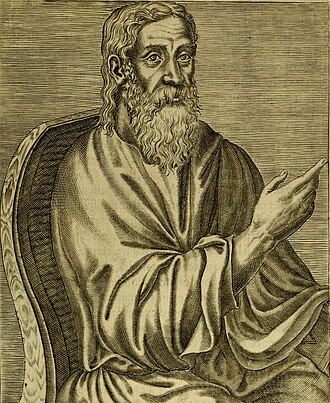
Clement of Alexandria · c. 150 – c. 215
Exhortation to the Greeks; The Instructor; Stromata
c. 190–215 · Ante-Nicene Fathers vol. 2 (1885) · translated from the Greek
53pages
22 h 59 minreading time
814passages linked to Scripture
3,421links to verses
Contents
- Chapter I.—Exhortation to Abandon the Impious Mysteries of Idolatry for the Adoration of the Divine Word and God the Fa1
- Chapter II.—The Absurdity and Impiety of the Heathen Mysteries and Fables About the Birth and Death of Their Gods.2
- And Euripides:—2
- Chapter III.—The Cruelty of the Sacrifices to the Gods.3
- Chapter IV.—The Absurdity and Shamefulness of the Images by Which the Gods are Worshipped.3
- Chapter V.—The Opinions of the Philosophers Respecting God.4
- Chapter VI.—By Divine Inspiration Philosophers Sometimes Hit on the Truth.4
- Chapter VII.—The Poets Also Bear Testimony to the Truth.5
- Renounce Olympus!"5
- Chapter VIII.—The True Doctrine is to Be Sought in the Prophets.5
- Chapter IX.—"That Those Grievously Sin Who Despise or Neglect God's Gracious Calling."6
- Chapter X.—Answer to the Objection of the Heathen, that It Was Not Right to Abandon the Customs of Their Fathers.6
- Do I myself wander?"6
- Chapter XI.—How Great are the Benefits Conferred on Man Through the Advent of Christ.7
- Chapter XII.—Exhortation to Abandon Their Old Errors and Listen to the Instructions of Christ.7
- And a double Thebes,"7
- Book I8
- Chapter I. The Office of the Instructor.8
- Chapter II.—Our Instructor's Treatment of Our Sins.8
- Chapter III.—The Philanthropy of the Instructor.8
- Chapter IV.—Men and Women Alike Under the Instructor's Charge.8
- Chapter V.—All Who Walk According to Truth are Children of God.8
- Chapter VI.—The Name Children Does Not Imply Instruction in Elementary Principles.9
- Chapter VII.—Who the Instructor Is, and Respecting His Instruction.10
- Chapter VIII.—Against Those Who Think that What is Just is Not Good.10
- Chapter IX.—That It is the Prerogative of the Same Power to Be Beneficent and to Punish Justly. Also the Manner of the10
- Chapter X.—That the Same God, by the Same Word, Restrains from Sin by Threatening, and Saves Humanity by Exhorting.11
- Chapter XI.—That the Word Instructed by the Law and the Prophets.11
- Chapter XII.—The Instructor Characterized by the Severity and Benignity of Paternal Affection.11
- Chapter XIII.—Virtue Rational, Sin Irrational.11
- Book II.12
- Chap. I.—On Eating.12
- Chapter II.—On Drinking.12
- Chapter III.—On Costly Vessels.13
- Chapter IV.—How to Conduct Ourselves at Feasts.13
- Chapter V.—On Laughter.13
- Chapter VI.—On Filthy Speaking.13
- Chapter VII.—Directions for Those Who Live Together.13
- Chapter VIII.—On the Use of Ointments and Crowns.14
- Chap. IX.—On Sleep.14
- Chapter X. —Quænam de Procreatione Liberorum Tractanda Sint.14
- Chapter XI. —On Clothes.15
- Chap. XII.—On Shoes.15
- Chapter XIII—Against Excessive Fondness for Jewels and Gold Ornaments.15
- Book III.16
- Chapter I.—On the True Beauty.16
- Chapter II.—Against Embellishing the Body.16
- Chapter III.—Against Men Who Embellish Themselves.16
- Chapter IV.—With Whom We are to Associate.17
- Chapter V.—Behaviour in the Baths.17
- Chapter VI.—The Christian Alone Rich.17
- Chapter VII.—Frugality a Good Provision for the Christian.17
- Chapter VIII.—Similitudes and Examples a Most Important Part of Right Instruction.17
- Chapter IX.—Why We are to Use the Bath.17
- Chapter X.—The Exercises Suited to a Good Life.17
- Chapter XI.—A Compendious View of the Christian Life.18
- Chapter XII.—Continuation: with Texts from Scripture.19
- I.19
- II.19
- III.19
- Book I20
- Chapter I.—Preface—The Author's Object—The Utility of Written Compositions.20
- Chapter II.—Objection to the Number of Extracts from Philosophical Writings in These Books Anticipated and Answered.20
- Chapter III.—Against the Sophists.20
- Chapter IV.—Human Arts as Well as Divine Knowledge Proceed from God.20
- Chapter V.—Philosophy the Handmaid of Theology.21
- Chapter VI.—The Benefit of Culture.21
- Chapter VII.—The Eclectic Philosophy Paves the Way for Divine Virtue.21
- Chapter VIII.—The Sophistical Arts Useless.21
- Chapter IX.—Human Knowledge Necessary for the Understanding of the Scriptures.21
- Chapter X.—To Act Well of Greater Consequence Than to Speak Well.21
- Chapter XI.—What is the Philosophy Which the Apostle Bids Us Shun?21
- Chapter XII.—The Mysteries of the Faith Not to Be Divulged to All.22
- Chapter XIII.—All Sects of Philosophy Contain a Germ of Truth.22
- Chapter XIV.—Succession of Philosophers in Greece.22
- Chapter XV.—The Greek Philosophy in Great Part Derived from the Barbarians.22
- Chapter XVI.—That the Inventors of Other Arts Were Mostly Barbarians.22
- Chapter XVII.—On the Saying of the Saviour, "All that Came Before Me Were Thieves and Robbers."22
- Chapter XVIII.—He Illustrates the Apostle's Saying, "I Will Destroy the Wisdom of the Wise."23
- Chapter XIX.—That the Philosophers Have Attained to Some Portion of Truth.23
- Chapter XX.—In What Respect Philosophy Contributes to the Comprehension of Divine Truth.23
- Chapter XXI.—The Jewish Institutions and Laws of Far Higher Antiquity Than the Philosophy of the Greeks.23
- Chapter XXII.—On the Greek Translation of the Old Testament.24
- Chapter XXIII.—The Age, Birth, and Life of Moses.24
- Chapter XXIV.—How Moses Discharged the Part of a Military Leader.24
- Chapter XXV.—Plato an Imitator of Moses in Framing Laws.24
- Chapter XXVI.—Moses Rightly Called a Divine Legislator, And, Though Inferior to Christ, Far Superior to the Great Legis24
- Chapter XXVII.—The Law, Even in Correcting and Punishing, Aims at the Good of Men.24
- Chapter XXVIII.—The Fourfold Division of the Mosaic Law.25
- Chapter XXIX.—The Greeks But Children Compared with the Hebrews.25
- Book II.25
- Chapter I.—Introductory.25
- Chapter II.—The Knowledge of God Can Be Attained Only Through Faith.25
- Chapter III.—Faith Not a Product of Nature.25
- Chapter IV.—Faith the Foundation of All Knowledge.25
- Chapter V.—He Proves by Several Examples that the Greeks Drew from the Sacred Writers.25
- Chapter VI.—The Excellence and Utility of Faith.26
- Chapter VII.—The Utility of Fear. Objections Answered.26
- Chapter VIII.—The Vagaries of Basilides and Valentinus as to Fear Being the Cause of Things.26
- Chapter IX.—The Connection of the Christian Virtues.26
- Chapter X.—To What the Philosopher Applies Himself.26
- Chapter XI.—The Knowledge Which Comes Through Faith the Surest of All.26
- Chapter XII.—Twofold Faith.27
- Chapter XIII.—On First and Second Repentance.27
- Chapter XIV.—How a Thing May Be Involuntary.27
- Chapter XV.—On the Different Kinds of Voluntary Actions, and the Sins Thence Proceeding.27
- Chapter XVI.—How We are to Explain the Passages of Scripture Which Ascribe to God Human Affections.27
- Chapter XVII.—On the Various Kinds of Knowledge.27
- Chapter XVIII.—The Mosaic Law the Fountain of All Ethics, and the Source from Which the Greeks Drew Theirs.27
- Chapter XIX.—The True Gnostic is an Imitator of God, Especially in Beneficence.28
- Chapter XX.—The True Gnostic Exercises Patience and Self-Restraint.28
- Chapter XXI.—Opinions of Various Philosophers on the Chief Good.28
- Chapter XXII.—Plato's Opinion, that the Chief Good Consists in Assimilation to God, and Its Agreement with Scripture.29
- Chapter XXIII.—On Marriage.29
- Book III.30
- Caput I.—Basilidis Sententiam de Continentia Et Nuptiis Refutat.30
- Caput II.—Carpocratis Et Epiphanis Sententiam de Feminarum Communitate Refutat.30
- Caput III.—Quatenus Plato Aliique E Veteribus Præiverint Marcionitis Aliisque Hæreticis, Qui a Nuptiis Ideo Abstinent Q30
- Caput IV.—Quibus Prætextibus Utantur Hæretici ad Omnis Genetis Licentiam Et Libidinem Exercendam.30
- Caput V.—Duo Genera Hæreticorum Notat: Prius Illorum Qui Omnia Omnibus Licere Pronuntiant, Quos Refutat.31
- Caput VI.—Secundum Genus Hæreticorum Aggreditur, Illorum Scilicet Qui Ex Impia de Deo Omnium Conditore Sententia, Conti31
- Caput VII.—Qua in Re Christianorum Continentia Eam Quam Sibi Vindicant Philosophi Antecellat.31
- Caput VIII.—Loca S. Scripturæ Ab Hæreticis in Vituperium Matrimonii Adducta Explicat; Et Primo Verba Apostoli Romans 6:31
- Caput IX.—Dictum Christi ad Salomen Exponit, Quod Tanquam in Vituperium Nuptiarum Prolatum Hæretici Allegabant.31
- Caput X.—Verba Christi Matt. xviii. 20, Mystice Exponit.31
- Caput XI.—Legis Et Christi Mandatum de Non Concupiscendo Exponit.31
- Caput XII.—Verba Apostoli 1 Cor. vii. 5, 39, 40, Aliaque S. Scripturæ Loca Eodem Spectantia Explicat.32
- Caput XIII.—Julii Cassiani Hæretici Verbis Respondet; Item Loco Quem Ex Evangelio Apocrypho Idem Adduxerat.32
- Caput XIV.—2 Cor. xi. 3, Et Eph. iv. 24, Exponit.32
- Caput XV.—1 Cor. vii. 1; Luc. xiv. 26; Isa. lvi. 2, 3, Explicat.32
- Caput XVI.—Jer. xx. 14; Job xiv. 3; Ps. l. 5; 1 Cor. ix. 27, Exponit.32
- Caput XVII.—Qui Nuptias Et Generationem Malas Asserunt, II Et Dei Creationem Et Ipsam Evangelii Dispensationem Vitupera32
- Caput XVIII.—Duas Extremas Opiniones Esse Vitandas: Primam Illorum Qui Creatoris Odio a Nuptiis Abstinent; Alteram Illo32
- Book IV.33
- Chapter I.—Order of Contents.33
- Chapter II.—The Meaning of the Name Stromata or Miscellanies.33
- Chapter III.—The True Excellence of Man.33
- Chapter IV.—The Praises of Martyrdom.33
- Chapter V.—On Contempt for Pain, Poverty, and Other External Things.33
- Chapter VI.—Some Points in the Beatitudes.33
- Chapter VII.—The Blessedness of the Martyr.34
- Chapter VIII.—Women as Well as Men, Slaves as Well as Freemen, Candidates for the Martyr's Crown.34
- Chapter IX.—Christ's Sayings Respecting Martyrdom.34
- Chapter X.—Those Who Offered Themselves for Martyrdom Reproved.35
- Chapter XI.—The Objection, Why Do You Suffer If God Cares for You, Answered.35
- Chapter XII.—Basilides' Idea of Martyrdom Refuted.35
- Chapter XIII.—Valentinian's Vagaries About the Abolition of Death Refuted.35
- Chapter XIV.—The Love of All, Even of Our Enemies.35
- Chapter XV.—On Avoiding Offence.35
- Chapter XVI.—Passages of Scripture Respecting the Constancy, Patience, and Love of the Martyrs.35
- Chapter XVII.—Passages from Clement's Epistle to the Corinthians on Martyrdom.35
- Chapter XVIII.—On Love, and the Repressing of Our Desires.36
- Chap. XIX.—Women as well as Men Capable of Perfection.36
- Chapter XX.—A Good Wife.36
- Chapter XXI.—Description of the Perfect Man, or Gnostic.36
- Chapter XXII.—The True Gnostic Does Good, Not from Fear of Punishment or Hope of Reward, But Only for the Sake of Good36
- Chapter XXIII.—The Same Subject Continued.37
- Chapter XXIV.—The Reason and End of Divine Punishments.37
- Chapter XXV.—True Perfection Consists in the Knowledge and Love of God.37
- Chapter XXVI.—How the Perfect Man Treats the Body and the Things of the World.37
- Book V.38
- Chap. I.—On Faith.38
- Chap. II.—On Hope.38
- Chapter III.—The Objects of Faith and Hope Perceived by the Mind Alone.38
- Chapter IV.—Divine Things Wrapped Up in Figures Both in the Sacred and in Heathen Writers.38
- Chapter V.—On the Symbols of Pythagoras.39
- Chapter VI.—The Mystic Meaning of the Tabernacle and Its Furniture.39
- Chapter VII.—The Egyptian Symbols and Enigmas of Sacred Things.39
- Chapter VIII.—The Use of the Symbolic Style by Poets and Philosophers.39
- Chapter IX.—Reasons for Veiling the Truth in Symbols.40
- Chapter X.—The Opinion of the Apostles on Veiling the Mysteries of the Faith.40
- Chapter XI.—Abstraction from Material Things Necessary in Order to Attain to the True Knowledge of God.40
- Chapter XII.—God Cannot Be Embraced in Words or by the Mind.40
- Chapter XIII.—The Knowledge of God a Divine Gift, According to the Philosophers.41
- Chapter XIV.—Greek Plagiarism from the Hebrews.41
- Book VI.42
- Chapter I.—Plan.42
- Chapter II.—The Subject of Plagiarisms Resumed. The Greeks Plagiarized from One Another.42
- Chapter III.—Plagiarism by the Greeks of the Miracles Related in the Sacred Books of the Hebrews.42
- Chapter IV.—The Greeks Drew Many of Their Philosophical Tenets from the Egyptian and Indian Gymnosophists.43
- Chapter V.—The Greeks Had Some Knowledge of the True God.43
- Chapter VI.—The Gospel Was Preached to Jews and Gentiles in Hades.43
- Chapter VII.—What True Philosophy Is, and Whence So Called.43
- Chapter VIII.—Philosophy is Knowledge Given by God.44
- Chapter IX.—The Gnostic Free of All Perturbations of the Soul.44
- Chapter X.—The Gnostic Avails Himself of the Help of All Human Knowledge.44
- Chapter XI.—The Mystical Meanings in the Proportions of Numbers, Geometrical Ratios, and Music.44
- Chapter XII.—Human Nature Possesses an Adaptation for Perfection; The Gnostic Alone Attains It.45
- Chapter XIII.—Degrees of Glory in Heaven Corresponding with the Dignities of the Church Below.45
- Chapter XIV.—Degrees of Glory in Heaven.45
- Chapter XV.—Different Degrees of Knowledge.45
- Chapter XVI.—Gnostic Exposition of the Decalogue.46
- Chapter XVII.—Philosophy Conveys Only an Imperfect Knowledge of God.46
- Chapter XVIII.—The Use of Philosophy to the Gnostic.47
- Book VII.47
- Chapter I.—The Gnostic a True Worshipper of God, and Unjustly Calumniated by Unbelievers as an Atheist.47
- Chapter II.—The Son the Ruler and Saviour of All.47
- Chapter III.—The Gnostic Aims at the Nearest Likeness Possible to God and His Son.47
- Chapter IV.—The Heathens Made Gods Like Themselves, Whence Springs All Superstition.48
- Chapter V.—The Holy Soul a More Excellent Temple Than Any Edifice Built by Man.48
- Chapter VI.—Prayers and Praise from a Pure Mind, Ceaselessly Offered, Far Better Than Sacrifices.48
- Chapter VII.—What Sort of Prayer the Gnostic Employs, and How It is Heard by God.48
- Chapter VIII.—The Gnostic So Addicted to Truth as Not to Need to Use an Oath.49
- Chapter IX.—Those Who Teach Others, Ought to Excel in Virtues.49
- Chapter X.—Steps to Perfection.49
- Chapter XI.—Description of the Gnostic's Life.49
- Chapter XII.—The True Gnostic is Beneficent, Continent, and Despises Worldly Things.49
- Chapter XIII.—Description of the Gnostic Continued.50
- Chapter XIV.—Description of the Gnostic Furnished by an Exposition of 1 Cor. vi. 1, Etc.50
- Chapter XV.—The Objection to Join the Church on Account of the Diversity of Heresies Answered.50
- Chapter XVI.—Scripture the Criterion by Which Truth and Heresy are Distinguished.50
- Chapter XVII.—The Tradition of the Church Prior to that of the Heresies.51
- Chapter XVIII—The Distinction Between Clean and Unclean Animals in the Law Symbolical of the Distinction Between the Ch51
- Book VIII.51
- Chapter I.—The Object of Philosophical and Theological Inquiry—The Discovery of Truth.51
- Chapter II.—The Necessity of Perspicuous Definition.51
- Chapter III.—Demonstration Defined.51
- Chapter IV.—To Prevent Ambiguity, We Must Begin with Clear Definition.51
- Chapter V.—Application of Demonstration to Sceptical Suspense of Judgment.51
- Chapter VI.—Definitions, Genera, and Species.51
- Chapter VII.—On the Causes of Doubt or Assent.52
- Chapter VIII.—The Method of Classifying Things and Names.52
- Chapter IX.—On the Different Kinds of Cause.52
- II.52
- Clemens Alexandrinus53
- Who is the Rich Man that Shall Be Saved?53