
IN CHRISTENDOM —A DIP INTO THEOLOGY.
It was after long-continued fearful struggles that I finally submitted myself to become a theologue. I told jou before that I was born in a soldier family, and soldiers with all practical men despise pedantries and sentimentalities of all kinds. And what class of men are usually more unpractical than priests? >The wares they deal out to this busy society are what they call sentiments,— those uncertain nothings manufacturable by the worst sluggard in the world, — for which they get in return food, clothing, and other things of real and substantial worth. Bo we say priests live by charity, and we believed sword to be more honorable means of existence than charity.
To be a priest is bad enough; but to be a Christian priest I considered to be the end of my doom. In a heathen country like mine, Christian ministers are supported either directly or indirectly by foreigners, and are to place themselves under the jurisdiction of foreign bishops of one kind or the other. As no true German suffers himself to be ruled by an Italian or a French priest, so no true countryman of mine suffers himself to be shackled by a foreign influence of any kind. To call in an aid of economic principles, like Laissez /aire and Quid pro quo, to deliver oneself from this conscientious regard for national honor, w^e consider to be a baseness, and even a danger to our national independence. Thought is cosmox>olitan, and we are j^Iad, yea thankful, to be taught by all men of all nations. VaiX not 80 bread. The fact is, the bondage of mind is not the most dangerous kind of bondage; but that of stomach is. France had great Frederick's mind in bondage; but it was he who delivered Germany from French domination. I^russia had Voltaire's stomach in bondage; and behold his misery and degradation. O>smopolitanism in the sphere of things is always a vicious principle.
Thus in my case Christian priesthood meant a bondage of double nature; and honor for myself and honor for my country had ke]>t me from conceiving any idea whatever of entering into Christian ministerial service. Indeed, the first and greatest fear I had when I was iirst induced to accept Christianity was that they might make a priest out of me. And afterward w hen my enthusiasm in religious works called forth the attention of my Christian friends, and made them think that my probable mission in this life might be preaching, I rejected their suggestions with oaths and fistings. Professional clergymen I hated from the bottom of my heart, and I was perfectly wild when any of my friends persuaded me to become one.
iiUt this life-long prejudice against priesthood was greatly mitigated by my contact with clergymen of liigh and nohie order. The worthy President of my Sitv^ England cjAUtij^c. was a clergyman and theologian. The Methodist minister from whom I received baptism was a clergyman of most admiring chararrter; and I always exc<^pted him when i indulged in my usual den unriat ions of j)riest-class. i>r. F., my teacher in the Piiblical Interpretjition, Dr. li., our college pastor, and oth- er^ — ther w«^ all clergTmen. and were «.*/ humbug and traders^ in wind. I oame to siee tiiai olergvmen an? s^omerimes the mo^t us<n*ul membei^ of society, that it does ^xiy to have a ^hmI minister, that thev are here upon this earth doing s^^methiniT. and many a time, great thinirs.
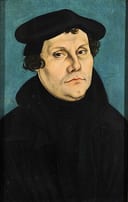
Was not Luther too a olerg\-man. though not a common clergyman? Was not John Knox, that valiant idol bre;\ker. a clergyman and thtvloglan? Were not some of the world's greatest warriors too thoughtful students of thtvlogy?,lohu Ham^Hleu. my ideal gv^ntleman and Ohrisriiiii. though an EngUsliman he. — was not his h dtvil the result or his profound thtx^logic co: tions? Gaspar de Coligny, — was his Thei^log\- of no account to him in forming his gig;:intic scheme:? for the renoviition of his K^loved Fran^v? If Theology was a plaything and a sorvvrer's cup of the world's grtwtest liars and hy|Hvrites, has it not also iHvn the emple;:he world's mightiest intelleets, and the. - r of the worlds uvv blest souls? If. as its etymologv" indicates. Theology is the sciemv of God. what true sims of Adam can excuse themseh-es frvnn the revennitial stmljk- of the same? What science of God's Vui- Terse is not Thtvlogx? And what actions of man can K^ right and true if not guidtxl by the scienct^ of Gixl? O my Soul, be thvni a thtH^logue then. IVliver it from tiie hand of hx-^nvrites and spiritual quacks, as Oavid did GihI's Ark from the hand of the rhilistim^s. The scieu^v itself is the noblest of all: man only is vile who leaves it in the hand of "heathens,"
The daily incrxwsiug sense of rt^ality of spiritual ex^vrieuivs heljHHl me to dis^vl all the notions of hollowness and uou-utility which I had ouiv attachtHl to ThtH^log\\ IndtHHl 1 Siiw the re^is<m ^^ mj hatred of Theology. If spirit is real, as rice and potatoes are real, wli.j despise Theology and praise Agriculture? If it is noble to grow corn, and feed myself and my hungering fellowmen with the fruits of God's Earth, why ignoble to learn of His Laws to appropriate His Spirit to our hungering souls, and be made nobbier and manlier thereby? Agriculture that raises only husks and straw, and gives them out to the public as real wheat and rice, we despise and hoot at. That indeed is no Agriculture, but it is Rock-Culture and Sand-Culture, which really feed nobody. So Theology I have been reviling at is No-Theology. It was Demonology, that gives out wind in place of spirit, rhetoric in place of sermon, and sound in place of music. Theology is substantial, eatable and drinkable, — so substantial, so nutritious that whosoever drinketh of the water it giveth shall not thirst, and whosoever eateth of the flesh it giveth shall not hunger. Ashamed of Theology? Yes, be thou forever ashamed of No-Theology, of Demonology, be it taught in Theological Seminaries or other institutions; but of Theology proper, wherever taught, be thou proud. The world that holds in honor the names of George Peabody and Stephen Girard, who freely gave out their perishable possessions for the relief of the poor and hungry, will continue to revere the names of Neander and Julius Muller and others of their kind, who systematized our religious thought, and made good-doing and God-serving almost a scientific possibility. "Heart is the centre of Theology," said the father of the Church History, and he that has no heart, but stomach only, should stand outside of it.
Thus persuaded, I made up my mind to study Theology, but upon one important condition; and that was that / sJwuld never be licensed. I said in mj heart, ''Lord, I shall study Theology if Thou compellest me not to be a reverend. Should I succeed to take in all the theologies of Christendom, I shall not add to my name that ponderous title designated by double D's. From that Thou must release me for this final sacrifice of mine." He said Yea, and upon that agreement I entered a Theological Seminary.
Sept. 18. Sunday. — If Theology is a science in which there is nothing real and practical, it is not worth studying. True Theology, however, is something real, yea, more real than any other science. Medicine alleviates physical sufferings of man; Jurisprudence treats of the civil relations of man to man; but Theology looks into the very cause of physical diseases and civil disorders. The true Theologian is naturally an idealist, but he is not a dreamer. The realization of his idea lies many centuries in future. His work is like contributing a brick or two into a massive building which takes an infinite number of years to be completed. He puts his hand upon it, only believing that honest and faithful works will never be lost.
Sept. 19. — Theology is too big a theme to be comprehended by small men. When small minds find themselves too small for such a gigantic theme, they construct their own theologies fitting their own smallness, and throw anathemas at those w^ho comprehend it better than they. O my Soul, do not contract Theology to fit thy smallness, but expand thyself to fit its largeness.
Oct. 12. — Rather disgusted with works in the recitation rooms. We discussed upon hell and purgatory in New Testament exegesis, and on equally unsubstantial subjects in Apolegetics. Spiritless Theology is the driest and most worthless of all studies. To see students laughing and jesting while discussing serious subjects is almost shocking. No wonder they cannot get at the bottom of the Truth. It requires the utmost zeal and earnestness to draw life from the Rock of Ages.
Nov. 3. — I am seeking for a higher type of morality than "must." I am hungering after the morality that cometh from God's grace. But such a morality is denied not only by the majority of mankind, but very little seems to be believed in by the students and professors of theological seminaries. I do not hear anything new and different within these sacred walls from those which I hear outside. Confucius and Buddha can teach me the largest part of what these theologues are presuming to teach to the heathen.
Nov. 7. — What is this world? It is a scene of universal enmity and dissension. Infidelity versus Christianity, Roman Catholicism versus Protestantism, Unitarianism versus Orthodoxy,— mankind pitches its tent, one part against another part, one section of one part against another section of the same part, — each trying to benefit itself by the mistakes and failures of others. Not only are individ-;iials not to be trusted, but mankind as a whole jare generations of vipers, manhaters, descendants of Cain. O my soul, away from isms, be they Methodism or Congregationalism, or any other high-sounding isms. Seek the Truth, quit thyself like a man, cease from men, and look above thee.
Nov. 18. — Am reading Life of David Hume. My religious enthusiasm is cooled down by coming in contact with the cool mind of this acute philospher. But I am willing to test my religious experiences in rigorous scientific ways. I want to be intellectually certain that I am not dwelling in "the Fata Morgana of philosophic dreamland." In this age of progress of physical science, it won't do to get rid of doubters with anathemas. Religion must be objectivized, made "tangible" and scientifically comprehensible. Yet alas! I see around me the trodding of the same old paths, each trying to excel the other how to ape the good old ministers who were "very much liked by their parishioners."
Dec. 5. — In every man's life there is a sort of paradigm divinely appointed beforehand, nis success consists in conforming himself to this paradigm, neither coming short of it, nor exceeding it. In it alone is perfect peace. His body and mind can be used to the best possible advantage when he walks in it. Lack of ambition often keeps him short of it, and he goes away from this world without accomplishing his work to the utmost of his capacity. On the other hand, too much ambition causes him to overleap it; hence shattered system and premature death. Man's selective power (free-will) lies in conforming himself to this paradigm. Once he puts himself in the current, then his efforts are no more spent in propelling him forward, but only in keeping him in the current. Take up, enjoy any blessings that lie in this current, but never go out of it to hunt after them. Dare through any obstacle which obstructs this current, for it cannot be an immovable mountain, since God appointed the way. For all this, trust not thyself. God hath appointed thy current; He also hatli appointed a Captain for thee. "Hear ye Himr
Dec. 29. — I feel ashamed that I am still ashamed sometimes before others of my studying Theology. The fact is, the worldlyminded cannot see the spiritual side of any study, and of course the idea of preaching for the sake of bread and butter must appear to them extremely mean. The real self-sacrifice of becoming a true preacher of the Gospel lies in the fact that the self-sacrifice does not look like a self-sacrifice to the mass of mankind. Yea more, it does look like the greatest possible meanness to them. Not so with practical charity and kind deeds of other sorts. To hide it (study of Theology) as much as possible from those who consider it a sacrifice, and to confess it before those who consider it a meanness, — ah yes, the Christian must go on a pretty thorny path in this world. Indeed, narrow is the way that is alloted to the children of the Cross. Father, forgiye my open denials of Thee before men, and give me more courage and confidence in my calling.
But I was not to continue my study of Theok)gy any further. Severe mental strains of the past three years unsettled my nerves, and chronic insomnia of a mo^t fearful kind took hold of me.
Rest, bromides, prayers proved ineffectual, and the only way now open for me was one leading toward my homeland. I was to quit Theology, and to go home with whatever gains I had made during my exile in foreign lands.
Further recollections showed me, how^ever, the wisdom and reasonableness of such an order of Providence. American seminaries, established expressly to train young men for American churches, are not the fittest places to train one destined for fields otherwise circumstanced than that country. Besides the exegetical studies of the Old and New Testaments, much that is taught in these seminaries may be dispensed with without detracting much from the usefulness of practical workers in missionary lands. Not that Pastoral and Historical and Dogmatic and Systematic Theologies are of no moment to us, for I sincerely believe there is no branch of the human knowledge which the Christian need not know; but the question is that of comparative importance. Not sceptic Hume, nor analytic Baur are we to grapple with, but with the subtilities of Hindoo philosophies, the non-religiosities of Chinese moralists, together with the confused thoughts and actions of new-born nations, materialistic in their new aspirations, but spiritualistic in their fundamental conceptions. "Church" in the common acceptation of the term as used by the Occidental Christians is wholly unknown among my countr^Tnen, and it is yet a grave question whether this institution, valuable though it doubtless is in other countries, can be planted with any hope of staibility among the people to whom I belong. The method of moral and religious teachings to which we have been accustomed during twenty centuries of our national existence is not that of sermonizing upon texts and deliv* ery from pulpits. With us we make no distinctions between moral and intellectual trainings. The school is our church, and we are expected to bring up our whole beings in it. Idea of speciality in religion sounds extremely odd, and even repulsive, to our ears. Priests we have, but they are essentially temple-keepers, and not teachers in Truth and Eternal Verities. All our moral reformers were teachers, ^'pedagogues," who taught in things of spirit while they taught in letters and science. ''Knowledge is of worth as it enlightens ways of righteousness. Man applies himself to its acquisition not to become a professional moralist thereby." So said Takayama Hikokuro, that eccentric heathen Japanese, and it was he, together with many such as he, that wrought the grandest and noblest reform, moral, political, and otherwise, that that island empire has ever witnessed.
And what about means and arts of soul-converting, church-member-making, and other similar business? A soul converted to Christianity by means and arts can be reconverted to heathenism also by means and arts. We in this materialistic century make too much out of environments. Darwinism seems to have converted Christianity at last. Good choirs, pleasant church sociables, young ladies' bazars, free lunches, Sunday-school picnics, — all such are now considered as important means to keep up spirit, and much of "Pastoral Theology" seems to be occupied with such business. And if polished Rhetoric is more coveted by young theologues than Fire, — and even that Fire for Rhetoric's sake, — and if preachers' •sermons are talked about more from the elocutionary and dramatic standpoints of view than from their fire-setting and idol-breaking aspects, well might Chrjsostom curse his tongue that delivered heavenly oracles with golden resonance, and Augustine despise Rhetoric as an art of deception. If, as critics tell us, St. Paul was not the handsomest of men, and his Greek not the purest of its kind; if Bossuet's eloquence and Masillon's finished style could not revert the onslaught of the French Revolution; if Bunyan a tinker and Moody a store clerk could make as good preachers of Gospel Truth as their ages could wish, — then need I not be sorry that I was not able to finish my training in a theological seminary.
I told you that I came to my seminary upon an agreement that I should never be licensed. Some of my good friends were sorry of my quitting theological study without having gone with it so far as to get a license. With me, however, license was the thing I was seriously afraid of. And the fear that I had entertained about the bestowal of this new privilege upon me grew more as I observed its benefits talked about within the walls of my seminar3\ "One thousand dollars with parsonage," "twenty dollars' sermon upon Chicago anarchy," and similar combinations of such words and phrases sounded very discordantly to my ears. That sermons have market-values, as porks and tomatoes and puuipkins have, is not an Oriental idea at least. We Orientals are very suspicious set of peoiple. So remarked John Stuart Mill, and compared us to Catholic Spaniards. And none we suspect more than one who has religion for sale. With us, religion is not usually convertible into cash. Indeed, more religion, less cash. Superstitious as we are, we cannot yet reconcile Religion with Political Economy. And if license seals market-values upon our religion, happy am I if I am not so sealed, for I tlius escajpe from the temptation.
Indeed, this matter of paid ministry is yet a much mooted question with us. Our heathen teachers used to have no stipuhited pays for their services. Twice every year, their pupils brought to them whatever did lie in the power of each to bring. From ten pieces of gold to a bundle of parsnips or carrots, were gradations of such "tokens of gratitude," as they were called. They had no deacons to poke them to death for churchdues and pew-rents, and other such things. A teacher was expected to remain as no-teacher till he had made enough progress in his spiritual disciplines as to be able to rely entirely upon heaven and his fellowm^en for the support of his body. This they considered a most practical method of "natural selection," no danger thus of being imposed upon with pseudo-teachers and time-servers.
I grant that man does not live by spirit alone, but by every thing that springs out of the ground as well. This is an argument for paid ministry, and we consider it an entirely fair argument. Our present-day Physiology deduces forces mental and forces spiritual from pieces of bread and mutton; and why not upon the principle of "Transmutability of Energy" exchange spirit for muttoii? Starvation of our bodies is no less a sin than that of our souls. Divine laws of health require that head-working and heart-taxing ministers of Gospel be properly and nicely fed and clothed.
The poor exacting Orientals cannot, however, see into this simple scientific argument. They do believe that man does not live by bread alone; that spirit somehow is a bodily food as well, and that mutton-chops and chicken-pies can be dispensed with by those wlio live with the plenitude of heavenly spirit in them. Hence ''unkind" criticisms upon the ways of missionaries' living. Of course these missionaries do not live in "palatial styles," as sometimes reported by the enemies of Missions. They only live as they live in their own lands. But to the people among whom they are sent, they do appear to live palatially. You know wealth and comforts are only comparative terms, and a lounge is a luxury to one who rolls upon a straw-mat. Herein comes, therefore, one barrier through which missionaries' zeal had to work pretty hard, in order to reach the perishing heathens with the glad tidings of salvation.
And once in a while come some "blessed" missionaries, who, looking into this idiosyncracy of heathens, comport themselves accordingly. They strip off their white neckties, have their heads pigtailed, deny themselves of pies and other homedelicacies, learn to bend their legs upon strawmats, and in all ways and diverse manners, go into their earnest business of winning souls to Jesus. To such we heathens bear with gladness. They help us wonderfully in coming to Light and Truth, and we bless them and Him that sent them for the good they do unto us. Such a missionary was one Mr. Crossett, a Presbyterian missionary to China. He became a Chinaman himself, and that not a Mandarin kind of Chinamen. Finally his "eccentricity" deprived him of home-support; but he had heathens themselves to help his works on. He started poor-houses in Pekin, supported by heathen Pekinese merchants. He travelled in steerage with average Chinamen. While thus on his mission over the Yellow Sea, the call to his high home came to him. The remonstrance of the ship's captain to him to come to his cabin and there lie in comfort was gently declined, as lie would like to die among tlie people to whom he was sent. They forced him to the cabin, and there he expired, commending all around him to his God and Savior. The news of his death reached his homeland. Religious papers passed it over without much comment upon it. Yea more. Cases were cited tacitly proving that his sacrifice was a foolish sacrifice, that good can be done in the first-class cabin, with white neck-ties on. Yet Pekinese and Tentsinese and other pigtailed gentlemen do not forget his service. They gave him the name of "Christian Buddha," — so hallowed was his presence among them. Of his religion perhaps very few of them benefited themselves; but of him all had to learn something about divine sorrow and love.
A fortunate missionary he! Perhaps not everybody can imitate him. Perhaps his stomach was that of an ostrich, that could digest Chinamen's food without dyspeptic effects. I say he was fortunate, because such as he need not complain of "the difficulty of the station." We will not try to ape him, because aping is hypocrisy, and no good comes out of it. Pigtailing and steeraging are no^ the essence of the matter, of course; but his spirit IS, w^hich we wall not despise as an "eccentricity." We will pray to be made like him, if any of us are ever ambitious to be successful missionaries among heathens.
But this adaptability to all surroundings is not to be acquired by seminary trainings. Such trainings do indeed adapt us to wrong surroundings, from which it is extremely difficult to un-adapt ourselves. Many a case do I know of my own countrymen, who have adapted themselves to Occidental ways of life and thought during such trainings, and coming liome as strangers, lias each to re-adapt himself to his former surroundings with the utmost difficulty. Boiled rice and smashed beans do not afford him all the nutriment his newly-adapted system requires, and sittings upon hard straw-mats cause synovitis and other troubles of his lower limbs. His throat suffers, because native churches have no steam-heaters to take off chill from the air, and his head rings, because the ventilation is poor. 'The least he needs is greatest in the eyes of his people. He loses flesh, and with flesh, spirit. Preaching becomes unbearable. To some other occupations he betakes himself, and others hardier than he take his place. Struggle for existence is too much for him. — ^Then his method of thought: how incompatible it too has become with that of his countrymen! He denounces Hume-ism and Theodore- Parker-ism; but Hume and Parker have had no existence in the minds of the people to whom he is preaching. The downfall of the Roman Empire and the persecutions of Bloody Mary sound as ''wind to the horse's ear," as we term all incomprehensibilities. He proves Biblical truths by the Bible; but the Bible is no more to these people than some sooty parchments of idle antiquarians. His sermons fly over their heads and vanish into the air. He is disappointed with his hearers, and his hearers with him. Dissatisfaction, grumbling, resignation, separation. Should we make princes to send to beggars? * * *
But these are only the negative aspects of seminary life, which I called forth to my reflections to console myself in the misfortune of the hour. The positive benefits of theological training need not be counted here in detail. If a seminary cannot make a prophet, — for the prophet, like the poet, is borti^ — it is the very best place for him to grow and develop. If it is not an abode of angels, — for such is nowhere to 'be found in this nether world, — it is a purer and holier association than any under heaven. The very fact that its defects stand out in stronger reliefs than those of any other institutions, proves the light shining therein to be brighter and more searching. Poor theologues, they stand in the greatest disadvantage in their attitude toward this criticism-loving generation. The world expects from them w^hat it can expect only from angels; it throws stones at them, while it is guilt3' of the very same sins it condemns in them. Mammonism it openly and Political-Economicaily follows, it reviles in the ministers of Gospel. Let Christian ministers, missionaries, repent in ashes and sackclothes toward their Almighty God and Savior; but tow^ard men, they as a class need not feel ashamed. We of the King's household make so much of failings which in the outsider's estimate are not worth a moment's reflection. Let not the commotion in Zion be construed by them as similar in nature to bowlings and gnashings of teeth in their own Mammondom.
I left my seminary to retrace my steps toward my homeland.