


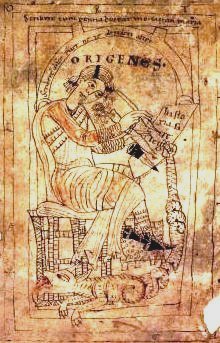
Origen · c. 185 – c. 253
Commentary on the Gospel of John
c. 231 · trans. Allan Menzies, Ante-Nicene Fathers vol. 9 (1896) · translated from the Greek
17pages
6 h 15 minreading time
144passages linked to Scripture
1,383links to verses
Contents
- Letter of Origen to Gregory.1
- Gregory is Urged to Apply His Gentile Learning to the Study of Scripture.1
- This Procedure is Typified by the Story of the Spoiling of the Egyptians.1
- Personal Appeal.1
- Book I.1
- How Christians are the Spiritual Israel.1
- The 144,000 Sealed in the Apocalypse are Converts to Christ from the Gentile World.1
- In the Spiritual Israel the High-Priests are Those Who Devote Themselves to the Study of Scripture.1
- The Study of the Gospels is the First Fruits Offered by These Priests of Christianity.1
- All Scripture is Gospel; But the Gospels are Distinguished Above Other Scriptures.1
- The Fourfold Gospel. John's the First Fruits of the Four. Qualifications Necessary for Interpreting It.1
- What Good Things are Announced in the Gospels.1
- How the Gospels Cause the Other Books of Scripture Also to Be Gospel.1
- The Somatic and the Spiritual Gospel.1
- How Jesus Himself is the Gospel.1
- Jesus is All Good Things; Hence the Gospel is Manifold.2
- The Gospel Contains the Ill Deeds Also Which Were Done to Jesus.2
- The Angels Also are Evangelists.2
- The Old Testament, Typified by John, is the Beginning of the Gospel.2
- The Gospel is in the Old Testament, and Indeed in the Whole Universe. Prayer for Aid to Understand the Mystical Sense of2
- Meaning of "Beginning." (1) in Space.2
- (2) in Time. The Beginning of Creation.2
- (3) of Substance.2
- (4) of Type and Copy.2
- (5) of Elements and What is Formed from Them.2
- (6) of Design and Execution.2
- The Word Was in the Beginning, I.e., in Wisdom, Which Contained All Things in Idea, Before They Existed. Christ's Charac2
- The Title "Word" Is to Be Interpreted by the Same Method as the Other Titles of Christ. The Word of God is Not a Mere At2
- Christ as Light; How He, and How His Disciples are the Light of the World.3
- Christ as the Resurrection.3
- Christ as the Way.3
- Christ as the Truth.3
- Christ as Life.3
- Christ as the Door and as the Shepherd.3
- Christ as Anointed (Christ) and as King.3
- Christ as Teacher and Master.3
- Christ as Son.3
- Christ the True Vine, and as Bread.3
- Christ as the First and the Last; He is Also What Lies Between These.3
- Christ as the Living and the Dead.3
- Christ as a Sword.3
- Christ as a Servant, as the Lamb of God, and as the Man Whom John Did Not Know.3
- Christ as Paraclete, as Propitiation, and as the Power of God.4
- Christ as Wisdom and Sanctification and Redemption.4
- Christ as Righteousness; As the Demiurge, the Agent of the Good God, and as High-Priest.4
- Christ as the Rod, the Flower, the Stone.4
- Of the Various Ways in Which Christ is the Logos.4
- Book II.5
- In What Way the Logos is God. Errors to Be Avoided on This Question.5
- Various Relations of the Logos to Men.5
- That the Logos is One, Not Many. Of the Word, Faithful and True, and of His White Horse.5
- He (This One) Was in the Beginning with God.5
- How the Word is the Maker of All Things, and Even the Holy Spirit Was Made Through Him.5
- Of Things Not Made Through the Logos.6
- Heracleon's View that the Logos is Not the Agent of Creation.6
- That the Logos Present in Us is Not Responsible for Our Sins.6
- "That Which Was Made Was Life in Him, and the Life Was the Light of Men." This Involves the Paradox that What Does Not D6
- How No One is Righteous or Can Truly Be Said to Live in Comparison with God.6
- Is the Saviour All that He Is, to All?6
- How the Life in the Logos Comes After the Beginning.6
- How the Natures of Men are Not So Fixed from the First, But that They May Pass from Darkness to Light.6
- Heracleon's View that the Lord Brought Life Only to the Spiritual. Refutation of This.6
- The Life May Be the Light of Others Besides.6
- The Higher Powers are Men; And Christ is Their Light Also.6
- How God Also is Light, But in a Different Way; And How Life Came Before Light.6
- The Life Here Spoken of is the Higher Life, that of Reason.7
- Different Kinds of Light; And of Darkness.7
- Christ is Not, Like God, Quite Free from Darkness: Since He Bore Our Sins.7
- How the Darkness Failed to Overtake the Light.7
- There is a Divine Darkness Which is Not Evil, and Which Ultimately Becomes Light.7
- John the Baptist Was Sent. From Where? His Soul Was Sent from a Higher Region.7
- Argument from the Prayer of Joseph, to Show that the Baptist May Have Been an Angel Who Became a Man.7
- John is Voice, Jesus is Speech. Relation of These Two to Each Other.7
- Significance of the Names of John and of His Parents.7
- The Prophets Bore Witness to Christ and Foretold Many Things Concerning Him.7
- The Six Testimonies of the Baptist Enumerated. Jesus' "Come and See." Significance of the Tenth Hour.7
- How John Was a Witness of Christ, and Specially of "The Light."8
- Fragments of the Fourth Book.8
- From the Preface.8
- How Scripture Warns Us Against Making Many Books.8
- The Apostles Wrote Little.8
- Sixth Book.9
- The Work is Taken Up After a Violent Interruption, Which Has Driven the Writer from Alexandria. He Addresses Himself to9
- How the Prophets and Holy Men of the Old Testament Knew the Things of Christ.9
- "Grace and Truth Came Through Jesus Christ." These Words Belong to the Baptist, Not the Evangelist. What the Baptist Tes9
- John Denies that He is Elijah or "The" Prophet. Yet He Was "A" Prophet.9
- There Were Two Embassies to John the Baptist; The Different Characters of These.9
- Messianic Discussion with John the Baptist.9
- Of the Birth of John, and of His Alleged Identity with Elijah. Of the Doctrine of Transcorporation.9
- John is a Prophet, But Not the Prophet.10
- John I. 22.10
- Of the Voice John the Baptist is.10
- Of the Way of the Lord, How It is Narrow, and How Jesus is the Way.10
- Heracleon's View of the Voice, and of John the Baptist.10
- John I. 24, 25. Of the Baptism of John, that of Elijah, and that of Christ.10
- Comparison of the Statements of the Four Evangelists Respecting John the Baptist, the Prophecies Regarding Him, His Addr10
- How the Baptist Answers the Question of the Pharisees and Exalts the Nature of Christ. Of the Shoe-Latchet Which He is U11
- Comparison of John's Testimony to Jesus in the Different Gospels.11
- Of the Testimony in Mark. What is Meant by the Saviour's Shoes and by Untying His Shoe-Latchets.11
- Luke and John Suggest that One May Loose the Shoe-Latchets of the Logos Without Stooping Down.11
- The Difference Between Not Being "Sufficient" And Not Being "Worthy."11
- The Fourth Gospel Speaks of Only One Shoe, the Others of Both. The Significance of This.11
- How the Word Stands in the Midst of Men Without Being Known of Them.11
- Heracleon's View of This Utterance of John the Baptist, and Interpretation of the Shoe of Jesus.11
- Jordan Means "Their Going Down." Spiritual Meanings and Application of This.11
- The Story of Israel Crossing Jordan Under Joshua is Typical of Christian Things, and is Written for Our Instruction.11
- Of Elijah and Elisha Crossing the Jordan.12
- Naaman the Syrian and the Jordan. No Other Stream Has the Same Healing Power.12
- The River of Egypt and Its Dragon, Contrasted with the Jordan.12
- Of What John Learned from Jesus When Mary Visited Elisabeth in the Hill Country.12
- Of the Conversation Between John and Jesus at the Baptism, Recorded by Matthew Only.12
- John Calls Jesus a "Lamb." Why Does He Name This Animal Specially? Of the Typology of the Sacrifices, Generally.12
- A Lamb Was Offered at the Morning and Evening Sacrifice. Significance of This.12
- The Morning and Evening Sacrifices of the Saint in His Life of Thought.12
- Jesus is a Lamb in Respect of His Human Nature.12
- Of the Death of the Martyrs Considered as a Sacrifice, and in What Way It Operates to the Benefit of Others.12
- Of the Effects of the Death of Christ, of His Triumph After It, and of the Removal by His Death of the Sins of Men.12
- The World, of Which the Sin is Taken Away, is Said to Be the Church. Reasons for Not Agreeing with This Opinion.12
- Tenth Book.13
- Jesus Comes to Capernaum. Statements of the Four Evangelists Regarding This.13
- The Discrepancy Between John and the First Three Gospels at This Part of the Narrative, Literally Read, the Narratives C13
- What We are to Think of the Discrepancies Between the Different Gospels.13
- Scripture Contains Many Contradictions, and Many Statements Which are Not Literally True, But Must Be Read Spiritually a13
- Paul Also Makes Contradictory Statements About Himself, and Acts in Opposite Ways at Different Times.13
- Different Accounts of the Call of Peter, and of the Imprisonment of the Baptist. The Meaning of "Capernaum."13
- Why His Brothers are Not Called to the Wedding; And Why He Abides at Capernaum Not Many Days.13
- How Christ Abides with Believers to the End of the Age, and Whether He Abides with Them After that Consummation.13
- Heracleon Says that Jesus is Not Stated to Have Done Anything at Capernaum. But in the Other Gospels He Does Many Things13
- Significance of Capernaum.13
- Why the Passover is Said to Be that of the "Jews." Its Institution: and the Distinction Between "Feasts of the Lord" And13
- Of the Heavenly Festivals, of Which Those on Earth are Typical.14
- Spiritual Meaning of the Passover.14
- In the First Three Gospels the Passover is Spoken of Only at the Close of the Ministry; In John at the Beginning. Remark14
- Discrepancy of the Gospel Narratives Connected with the Cleansing of the Temple.14
- The Story of the Purging of the Temple Spiritualized. Taken Literally, It Presents Some Very Difficult and Unlikely Feat14
- Matthew's Story of the Entry into Jerusalem. Difficulties Involved in It for Those Who Take It Literally.15
- The Ass and the Colt are the Old and the New Testament. Spiritual Meaning of the Various Features of the Story. Differen15
- Various Views of Heracleon on Purging of the Temple.15
- The Temple Which Christ Says He Will Raise Up is the Church. How the Dry Bones Will Be Made to Live Again.15
- That the Son Was Raised Up by the Father. The Charge Brought Against Jesus at His Trial Was Based on the Incident Now Be16
- The Temple of Solomon Did Not Take Forty-Six Years to Build. With Regard to that of Ezra We Cannot Tell How Long It Took16
- The Temple Spoken of by Christ is the Church. Application to the Church of the Statements Regarding the Building of Solo16
- The Account of the Building of Solomon's Temple Contains Serious Difficulties and is to Be Interpreted Spiritually.16
- Further Spiritualizing of Solomon's Temple-Building.16
- The Promises Addressed to Jerusalem in the Prophets Refer to the Church, and are Still to Be Fulfilled.16
- Of the Belief the Disciples Afterwards Attained in the Words of Jesus.16
- The Difference Between Believing in the Name of Jesus and Believing in Jesus Himself.16
- About What Beings Jesus Needed Testimony.17
- How Jesus Knew the Powers, Better or Worse, Which Reside in Man.17