

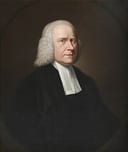
JOEL BULU- AN AUTOBIOGRAPHY,
i) WAS born at Vavau! in the heathen days, nor was it till I was a big lad that the Zotw? came to our land. When I heard the report of it, I was full of anger, and my soul burned with hatred against it. “And shall our gods be forsaken?” I cried in great wrath. “As for me, I will never forsake them.”
There were many others also of my mind; and we were one together in our hatred against the lotu, until one day, when we heard a man talking of it, who said that it promised a land of the dead different from the Bulotw® of which
14. Yoel Bulu: an Autobiography.
our fathers spoke—even a home in the sky for the good, while evil men were cast into a dreadful place, wherein there burned a fire which none could quench. On that very night I went forth with the lads of our town. It was a fine night; ” and looking up to the heavens where the stars were shining, this thought suddenly smote me: “QO the beautiful land! If the words be true which were told us to-day, then are these lotu people happy indeed;” for I saw that the earth _ was dark and gloomy, while the heavens were clear, and bright with many stars; and my soul longed with a great longing to reach that beautiful land. “I will lotu,” said I, “that I may live among the stars,”
But I feared my father and our kinsfolk, for they were all heathen, and great was their hatred against the lotu; so that it was many days before I could make up my mind. But I could not rest because of the great longing within my soul, and at length I went away to another town, where dwelt Ulukalala, a Christian chief, and made my request to one of his péople, who took me to him, saying, “Here is the son of Mafitangata: he is come, because he wishes to lotu.”
“Good is your coming,” cried the chief, for great was his joy. “But why do you want to lotu?” «TI have heard,” was my reply, “of the good land whither you go after death; wherefore do I wish to lotu, that I also may be a dweller in the sky.” So they prayed over me. And thus it was that I turned to Christianity; but of its meaning I knew nothing. One thing only I knew, that I wanted to live among the stars. When my father heard what was done, he was “very angry; and calling together all our kinsfolk, he sent for the heathen priest, and told him that I had cast away the old gods, and why. Then the priest became inspired after their. lying fashion, and uttered a lamentable ery: “ Why has he forsaken me? What have I done to him that he should hate me? Have I not always watched over and kept him ever since he was but a little child? and now that he is a big lad, he turns his back upon me.” Then were my friends very mad against me when they heard these words, which they believed to be the words of the god (for, when a priest was inspired, we used to think that it was not he ° who spoke, but the god), and they sprang to their feet in hot wrath, saying, “ Let him be clubbed! He shall die to-day!”
And I was afraid when I heard these words and saw the deadly anger in their faces; so I _ said to myself, “It were well for me to: lie to them, that I may live;” and I cried out, “Take pity upon me. I will cast away the lotu.” With these words their wrath was appeased; but no sooner had I spoken than a great grief sprang up in my breast. “I have thrown away the good land,” said my soul within me; and, stealing away into the forest, I knelt down and prayed to God: “O Lord, I have cast away the lotu because I feared the anger of my friends; but I lied to them, I lied to them, for I wish to hold it still.” And thus, day after day, I used to hide myself in the forest, and pray to God, though indeed I knew not what to ask Him for, All I knew of the lotw was the good land among the stars.
When Ulukalala heard that my father had made me turn heathen again, he was very angry, and our friends were afraid of his wrath; so they made a great feast, to which the priest was called, whereat they bade farewell for me to the heathen gods, and gave me over to the lotu. So I went away to Hakoka, the town of Ulukalala, where I lived until war arose between the lotu folk and the heathen, wherein. we were victorious; and when we had beaten them, they said that our God was stronger than theirs; wherefore they all lotued, and I went back to my father.
All this time I knew but little of religion— my soul was dark; but I tried to be good, because of the great longing that I had after the beautiful land in the sky; and so ignorant was I, that I thought I could get there by my own strength alone. Then came Mr. Thomas to Vavau; and, standing under a tree in the public square, he preached to us from the parable of the tares among the wheat. It was this sermon that pierced my soul; for I had thought that I was one of the wheat, and now I found that I was among the tares, As I heard, I wept and trembled, for
T thought, “I shall never see the good land;” and it seemed to me that the devils were waiting. for me behind the trees which grew in the square, to drag me down to that awful pit of which I had heard, where burns the fire that. none can quench. When the sermon was over, and the people rose to go, I sat in my place, quaking for fear, and weeping in great anguish, for all the strength had gone out of my body; and I could not rise, till some of my friends raised me up, and led me away, staggering like a drunken man. When we reached the house,- I fell down within the doorway, weeping bitterly; and our people, looking upon me, and seeing that my face was like that of a man in great pain (for the anguish of my soul was written upon my face), thought that some evil disease had taken hold upon me. “ What is the matter with you?” they asked; and I said, “Pray for me. Pray for me, I beseech you.” So they knelt down and prayed for me, first one, and then another, till they were tired; and then they sat looking at me, not knowing what it was that made me
20 «6 Foel Bulu: an Autobiwgraphy.
weep. But I found no comfort in their prayers, for they prayed for my body, whereas it was my soul that was sick; so I rose, and going to an empty outhouse, I knelt down there by myself, weeping and praying before the Lord, for now I felt that I was a sinner: the wrath of God lay heavy upon my soul, and I hated myself because of my evil ways. “O, what is that repentance whereof the preacher told us?” I cried. “ Lord, let me find it, that I may live;” for so dark was my soul, that I did not know that this sorrow and fear of mine were marks of repentance. Thus I continued for a long while, no longer thinking that I was fit for the good land among the stars, but seeking the Lord in prayer with many tears; and often did I hide myself in the forest, and pray to God that He would give me this repentance; while so great was my fear, that if but a bird flew suddenly past me, 1 started and trembled, thinking that the devils were come to drag me away.
When the Christian people saw my earnestness, they had compassion upon me, and came near to me, teaching me all they knew of the Way of Life. The missionary also took pity. upon me, and comforted me with many good words, so that I began to understand somewhat more of the way; but still my sorrow did not leave me, and I could -find no rest for my soul. _ Thus I went on for many days, seeking the Lord with tears, but finding Him not; and at length I was appointed to help in the work. So I went forth to teach others—I who wanted teaching myself; but indeed I did what I could, exhorting all men to flee from the wrath to come, from which I also was fleeing with all my might though whither to go for safety I knew not.
At last there came a day (1834) whereon the missionaries (of whom Mr. Turner was one) assembled us together to hold a Love-feast—us who were employed in the work; and when we had sung a hymn and prayed, then Mr. Turner stood up to declare the work of God in his soul, My heart burned within me as I listened to his words; for, in speaking of himself, he told all I had felt, and I said to myself, “ We are like two canoes sailing bow and bow, neither being swifter nor slower than the other.” Thus it was with me while he told of his repentance; but when he went on to speak of his faith in Christ, the forgiveness of his sins, and the peace and joy which he found in believing, then said I, “My mast is broken, my sail is blown away; he is gone clean out of my sight, and I am left here drifting helplessly over the waves.” But while I listened eagerly to his words, telling of the love of Christ to him, my eyes were opened. I saw the way; and I, even I also, believed and lived. I was hke a man fleeing for his life from an enemy behind him, and groping along the wall of a house in the dark to find the door, that he may enter in and escape, when, lo! a door is suddenly opened before his face, and straightway, with one bound, he leaps within. Thus it was with me as I listened to the words of Mr. Turner: my heart was full of joy and love, and the tears streamed down my cheeks, Often had I wept before; but not like my former weeping were the tears which I now shed. Then I wept out of sorrow and fear, but now for very joy and gladness, and because my heart was full of love to. Him Who had loved me and given Himself for me; and Mr. Turner, seeing the tears raining heavily down from my eyes, called upon me to speak. “Stand up, Joel,” said he. “Stand up, and tell us how it is with you.”
So I stood up; but it seemed to me as if my soul were parted from my body, and I remember nothing more until I found myself lying on the mats, Mrs. Cargill supporting my head upon her lap, while the missionaries held me by the hand, weeping as they looked down upon me. “ What is this?” they cried, “ What ails you, Joel?”
“T live!” said I; “I live! Let me arise, that I may declare the mercies of God.” And even while I spoke, there arose a great cry in our midst, and a burst of weeping, for the. hearts of all were strangely moved; and Mr. Turner stood up with the tears streaming down his cheeks, and cried aloud, “ Let us spend the rest of our time in prayer, and in praising God.”
O, what a day was that! Never can I forget
24 6 Foel Bulu: an Autobiography.
it. The prayers, the praises, and the tears of joy! There were many like myself, who had long been seeking the Lord; and how many of us there were who found Him on that day I do not remember rightly, but we were very many. Nor did we break up our meeting until the night had come over the land; and even then we were loth to part. Before we went away, Mr. Turner said to us, “Blessed be God for the great thing which He has wrought among us to-day! But this is only the beginning of a greater work. Let us now go, each man to his own house, and pray © that the heavenly rain, which has watered our souls, may fall on all the land, for the land is athirst.” And this word of his came to pass; for when a teacher, named Isaiah, who was with us in our meeting, went to preach at another town, the same great work broke out there also. And so it went from place to place, until it reached the town of the king, whither we all went to help it on, and to rejoice over the great things which our God was bringing to pass. This was the time when King George repented of his sins, aud lay weeping on the chapel floor until he could bear no more, but fled away to his own. house, where he ceased not to seek the Lord with strong crying and tears until he found Him, to the joy of his soul; and then we were all gathered together to his house, that he might tell us what God had done for him. And still the work went on from house to house, and from town to town; strangers also, who had come sailing to us from the other islands, carrying it with them when they went back to their homes —a work great and glorious, such as I have never Seen since those days. As for myself, I lived in great peace and joy, for everything was going on well, and I used to think that, if we had all died in those days, we should have gone straight to heaven in one great and mighty band. O that I could see such a work as that here in Fiji I have worked for it, I have prayed for it, I have waited for it; and if I could but see it coming, if I could live through but one day of it, then would I say with joy and gladness, like Simeon of old, “Lord, now lettest Thou Thy
26 6. Foel Bulu: an Autobiography.
servant depart in peace, for mine eyes have seen Thy salvation.” 3
After a while Mr. Turner went away from Vavau, and Mr. Thomas came in his stead. In those days there was a great friend of mine, one Jacob Fekeila by name, the teacher at Leimatua, which was about as far from the town where I was stationed as Mbau is from Kamba [about six miles]; and with him I used to meet every Friday, that we might pray together, and help one another on the way to heaven. One day, as I was going to see him, there met me in the path a man, who told me that the word of the missionaries in Fiji had come to Tonga, begging for teachers to help them in the work of God; and while he was yet speaking, my soul burned within me, and a great longing sprang up in my heart to go away to that land and declare the glad tidings of salvation to the people that knew not God. I spoke no word, for indeed I could not speak; but, turning my back upon the man, I went on my way towards Leimatua, weeping as I went, because of the fulness of my heart.
There I found my friend waiting for me in the little house which he had built as a house of - prayer. “What is the matter with you?” he asked, for he saw the tears in my eyes; and 1 told him of my meeting the man in the path, and of the great longing which had sprung up within my soul.
“Good,” said he. “ Perhaps it is the will of God concerning you. Let us pray about it;” and, kneeling down, we prayed for each other, and for Fiji also—asking moreover of the Lord to put it into the hearts of the missionaries to send me to Fiji, if it were His will that I should go; and, after our prayer was ended, I went back to my own town.
That night I could not sleep, but lay thinking of Fiji, and weeping as I thought of how there. were many thousands there who were living in darkness, not knowing the true God. At last I could refrain no longer, and, rising to my feet, I said to my wife, “I cannot sleep; I must go to Neiafu.” Now this Neiafu was the town where the missionary lived, and there also dwelt a
Christian chief, Silas Faone by name, with whom I often met for prayer. So I went to him, and told him all that was in my mind. “Lie down now and sleep,” said he, when he had heard my words. “In the morning we will ask the missionary about it.”
In the early morning, before the sun had well risen, there came a man, called Isaiah Vovoli, to the house where I had slept.
“Are you here, Joel?” he cried. “Good is your coming, for I was just going to seek you. Mr. Thomas has sent me for you.”
So I went to the mission-house; and Mr. ~ Thomas said to me, “ Joel, a letter has come from Fiji, begging for help; and ever since I read that letter I have been thinking of you.”;
Then I told him why I had come to. Neiafu, how Fiji was ever before my eyes, and how the desire to go thither lay like a burning coal at my heart. “Good is the will of the Lord,” said he. “Tt is plain that you must go. Come, Joel, let us kneel down and ask God’s blessing upon you.” And thus the matter was settled.
Great was the weeping of my friends on the day of our departure. My wife and I, we also wept at parting from them; but though my eyes were wet, yet was there joy in my heart, for the Lord comforted me. We sailed to Fiji in a canoe, hoisting sail when the day was far spent, so that the land was still in sight when darkness came down upon the waters. We went sailing through the night before a pleasant breeze, through all the next day also, and the following hight; but on the second morning Mothe’ rose out of the waters in our course, and landing there, we offered up our thanksgivings to the Lord, because He had brought us thither in safety. Thence we went on to Lakemba, where Mr. Cargill rejoiced greatly at our coming; and I set myself to learn the language, and to help in the work. After I had been here some little time, Mr. Hunt and Mr. Calvert came out from England, bringing with them a printing press.
30. ~=—- Foel Bulu: an Autobiography.
Mr. Hunt? went to Rewa, and I was appointed to help Mr. Calvert in the printing, which I did until it was the mind of the missionaries to send me to Rewa; whither I went with Mr. Lyth, who also had come down from Tonga to preach the Gospel in Fiji.
There were but few Christians at Rewa in those days, and many were the sufferings which we had to endure. We were often abused and threatened, our goods were stolen, and the heathen stoned us when we met together to worship God. But none of these things moved us, for we believed that our God was stronger than the devil, and that He would prevail. We lived at Nasali, the river being between us and the town; and awful were the sights which we saw from day to day, for Rewa was then a great kingdom, strong, and full of people. All the open spaces in the midst of the town, which are now empty and grass-grown, were then covered with houses, and the hearts of both chiefs and people were hardened and lifted up, so that they defied the living God; wherefore has He smitten them. down and destroyed them, and the mounds whereon stood the houses of the living are now full of the bones of the dead. Day after day we saw the bodies of the slain brought to the town, and the refuse floating past us as we stood upon our bank of the river; for the Notho people were then fighting among themselves; and when any one was killed, the body was brought to Rewa, and presented to the king. These were not eaten, for Notho belongs to Rewa, and they were killing one another in their own quarrel; but their bodies used to be thrown down on the flat opposite our houses, and there the children used to drag them up and down, sometimes on land, sometimes in the water, singing the Song of Death.
Moreover, the Tokatoka and the Nakelo! tribes were always at war in those days. They lay in wait for one another in the paths: they hid
32 © Foel Bulu: an Autobwgraphy.
themselves in the long reeds on the river banks, whence they fired their guns and threw their spears at the women as they came down with their water-pots or their fish-baskets, at the canoes as they passed by, and at the children at their play. Seldom could you pass their towns without hearing the death-drum booming forth from one bank or the other; and the bodies of these slain also were brought to Rewa, either to the king, or to Nggara ni Nggio,” his brother, who took opposite sides in the quarrel,. _ though not themselves coming to blows about it. These bodies also were not eaten. Having been presented to the chiefs, they were sent back for burial; but we saw that the Tokatoka men _ always cut out the tongue, the heart, etc., before they brought a dead body to Rewa. Men from Suva and other places were always eaten; and Rewa being then on friendly terms with Mbau, whole canoe-loads were often brought thence as goodwill offerings, at which times we looked on sights that made our hearts sick with a deadly sickness, Well do I remember one day, when Mbau and Viwa had smitten Teilau—the little island opposite Viwa, which stands empty at this day—how a large war-canoe came in heavily laden with the dead, who were taken ashore and piled up in a great heap on the low flat opposite ‘to our houses; and when the Mbau messenger had finished his report, the king said, “Do what you like with them,” whereupon there rose a sudden yell. A great rush was made down to the water-side, and the bodies were dragged hither and thither, as the people struggled with.
one another over them, many clutching at the same body, cutting thém up limb from lmb, tearing them asunder, and snatching the pieces out of each other’s hands. And the yells rose louder and louder as the people grew ever fiercer in their eagerness; women and children also mingling with them in the struggle, their _ shrill voices rising high amid the uproar, Many years have passed since that fearful day; but sometimes, even now, I see that struggling crowd and hear that awful yelling in my dreams; and when I wake, I thank God for the lotu, which has wrought so wondrous a change in that proud and savage tribe.
Where the missionary’s study is now built, ' on the raised mound called Thakauyawa, there stood a house, in which the hands of the slain were hung up and smoked. I have seen the roof full of hands, hanging there in the smoke, the fingers drawn up like the claws of a roosting bird; and the chiefs would sit round the fire, and point up at them with a laugh and savage jest, making their mock at their dead owners.
I was at Rewa when the chiefs of America ‘came in their war-ships and took Ratu Veindovi away, because he had killed some of their people who were fishing for béche-de-mer in the old times. The King of Rewa, with the queen and others also, went to see the ship, and the American chief kept them on board, saying that he would not let them go unless Veindovi were given to him. When this news was brought to the town, there was a great uproar, and the warriors ran together, vowing to kill us all, because they thought the missionaries had a hand in this deed. Then were we in great fear, but a Rewa chief came over to us; and when the warriors appeared in sight, he went up to them, -and presented an offering of atonement for us, begging that we might not be killed. So we escaped; but indeed we thought that our time had come.
The chiefs hardened their hearts, and set their faces against the lotu; but in spite of them the
360 = Foel Bulu: an Autobiography.
work went on, though slowly, and doors were opened here and there. Thus we found an opening to the island of Kandavu, whither two teachers were sent,—even Isaac, a Fijian, and Abraham, a countryman of my- own, who was afterwards with me at Nandi, and who was lost at sea in the great hurricane—he and many others. They lived at a town called Suesue; and the lotu was making good way, when Abraham, having come from Kandayvu to make his report to the missionaries, was forbidden by Nggara ni Nggio to return; and we heard that a canoe belonging to the Vusanamu tribe? was being made ready for sea, the chief having sent orders that they were to go to Kandavu and kill Isaac. When we heard this report we were in great perplexity, for we could not leave our comrade to die without making an effort to save him; but what to do we knew not. At length we begged a double canoe from one of the chiefs, and I was sent to look after Isaac, and to bring him away if I could. A miserable sailing was that; for the wind was strong, the sea ran high, and the rain came pouring down all the day, so that we could not see whither we were steering. We were wet, and cold, and wretched, being, moreover, in great fear that the sea would swallow us up; but the Lord watched over us, and brought us safe to land. It was late at night when we reached Kandavu, and very dark, the rain still falling heavily; and we anchored the canoe in deep water, so that we might hoist sail at once and flee, if need were; for we durst not run her on the beach, for fear lest we ‘should be attacked; in which case, if she were aground, we should all have been killed while trying to get her afloat.
“Who will go with me to the town?” I asked; and two of our people volunteered. So we three went together, creeping stealthily along the beach towards the town, for we knew not whether Isaac were living or dead, the Vusanamu
38 = Foel Bulu: an Autobiography.
canoe having got the start of us. Presently we were aware of a smell—the smell of an oven‘ wherein a man is being*baked; and a great fear came upon us. “It is all over!” said I; “we are too late;” and groping along the sand in the darkness, we found the oven with a club hanging over it—the club, I suppose, wherewith the deed was done. “It is Isaac who lies baking here,” we said; and, weeping, we returned to the canoe. After telling our comrades what we had found, we went ashore again, being fully resolved to make sure as to his fate, though we doubted not that the man in the oven was he. ‘Through the rain and the darkness we groped our way to the town, and, creeping into Isaac’s house, we crouched down within the doorway, scarce daring to breathe, lest his murderers should be sleeping there, and at our wits’ end to know how to find out who were in the house. “Let us put something on the fire,” said I in a low whisper. “If they are here, we can escape before they are fully awake;” and gathering together the leaves and bits of reeds which lay in the fireplace, a bright flame soon shot up from the hearth, by the light whereof we saw a mosquito-curtain hastily lifted up from within, and we heard a startled voice crying, “ Who’s that? Who is there?”
“From Rewa we. Who are you?” said J, hand and foot ready for a spring, that we might rush to the door and _ escape. “Methuselah,” answered the man. “Is that you, Joel? Who is with you? Why are you come?”
“Tt is I. Our people are with me. But where is Isaac?”
“He is sleeping here behind me,” answered
40 © Foel Bulu; an Autobiography.
Methuselah, pointing to the end of the house. “Wake up, Isaac. Joel Bulu is here.” g
“Hush!” said I. “Speak low. Who, then, is the man in that oven on the beach?”
Great was our rejoicing when we saw Isaac alive and well; and he told us that he whom we had found in the oven was a Kandavu man, whom the Vusanamu had killed at the command of Ratu Nggara ni Nggio. He told us, moreover, that the murderers had said nothing to him, save that the chief was resolved that there should be no more lotu at Kandavu; so we got him and his on board the canoe as soon as possible, and took them back with us to Rewa.
It was while I was living on this station that I fought with a great shark.' Here are the marks of his teeth on my arm, where you see this big scar. Truly that was a wonderful deliverance. One night I dreamt that a shark bit my arm—this arm here, where you see the deep scar—and I awoke in great fear; but finding it was only a dream, my heart was glad. For many days afterwards, when I went to bathe, I feared to go down into the deep water, but stayed close to the shore, lest my dream should come true. But one day a young chief, who was vasu’ to Mbau, called me, saying, “ Come out for a swim, Joel;” and I refused, for I feared the shark. Again he called me, and again I refused; but when for the third time he shouted for me to come, I saw that he was bent upon it, and I did not like to say “no,” lest his heart should be evil against me. So I went with him. In the river there were many boys swimming their toy canoes; and laying hold of one, he said, “ Take a canoe, Joel, and let us see which will beat—yours or mine.” So I took one; and presently seeing that his was shooting ahead, I gave mine a push to make it go faster; whereupon he also pushed his, and soon we were swimming in the deep water, following our canoes. “Let us go to the other bank,” said he; and we swam across the river, a great crowd of Mbauans and Rewans following us. They all climbed up the bank; but I stayed in the river, for it was in my mind to swim back and return to my house. As I was wading towards the deep water, I saw two little waves coming - towards me on the surface. “It is a-shark,” I thought. “My dream is true.” I was afraid to turn back, for I was too far from the shore. * So I stood still, hoping that the shark might not see me; and the little waves came slowly on. Holding my breath, I stood, and by and by the waves disappeared. Then I said, “It was nothing;” and I struck out to swim for Nasali. Suddenly something struck sharply against my thigh. It was the shark biting me, but I did not feel much pain; and, thinking it was only one of the young men who had dived and caught hold of me, I put my hand down to seize him, ‘and lo, it was a shark! Then was it with me as if my soul were clean gone out of my body. A great darkness fell upon my eyes, and I could no longer see the shore or the people or the houses: all was dark. One thing only I remembered—the lotu; and I said, “To-day my life is at an end. Let me now pray once more to my God.’ I prayed, and in one moment the darkness was gone, though still I could not see the shore or any earthly being; but as I looked upwards, it seemed to me that the heavens opened, and I saw the throne of God, and a great multitude clothed in white © raiment, and shining with a blaze of light. O the glory of it, the wondrous glory! It was gone in a moment, like a flash of lightning on a dark night; but I saw it, Isaw it! As plain as noonday I saw it, and my soul was glad and strong within me. I wished not to live. “Let me die to-day,” said my heart, rejoicing. I no longer feared the shark. It was as nothing to me, though my flesh was torn, and my blood was flowing. But now he let go my thigh, and came at me again to bite me. Then I seemed to awake, as it were, out of a dream, and my soul grew hot against him as against an enemy who wished to kill me. When he drew near, and opened his mouth to bite, I thrust my hand down his throat—down, down as far as I could thrust it, for I thought I would tear out his heart, and so kill him. His teeth closed on my arm, and tore the flesh;? but still I worked my hand downwards with all my might; and at length he could no longer bite me, but opened his mouth as if he were sick, Then I snatched forth my hand, and, clasping him round the body with both arms, I lifted him up as high as I could, holding my head down so that he could not bite me. Thus I staggered with him towards the shore, and I could hear his jaws clashing together over my head as he tried to bite; but I held him fast, and I believe that I should have got him to land, only that, -when I reached the shallow water, my right arm, which he had bitten, fell powerless to my side, whereupon he slipped out of my grasp, and began to swim away, though very slowly and feebly. So hot was my wrath against him, that I turned and caught him again by the tail with — my left hand; but now the shore and the trees and the people seemed as if they were going round and round. <A deadly sickness crept upon my heart; a mist came over my eyes; there was a sound in my ears like the roaring of the surf; I fell down and knew no more. And this is how the Lord delivered me out of that fearful strife, i
We had not much to cheer us in those days. But few turned to serve the living God; for the ‘people were eaten up of savage pride, and the land was full of all manner of heathen abominations, some of which I have already told; but there were others concerning which I dare not even speak. It was when war broke out between Mbau and Rewa that we had to look upon the worst sights; for then the people grew mad with rage, and there was no end to the killing of men and the strangling of widows. Truly these were awful times, for there was no peace nor any sense of safety either day or night. The chiefs were divided among themselves, every man’s hand being against his neighbour, while the enemy were pressing upon them from without; so that things grew worse and ever worse as the Mbauans gained ground, until the missionaries had to leave; and, after a little while, I also went away in the Triton to
Viwa, where Mr. Hunt was living: nor was it many days afterwards before Rewa was sacked and burnt to the ground, its people being slain with a fearful slaughter.
When I had stayed some time at Viwa, Mr. Hunt sent me over to Vanua Levu in a canoe, that I might go throughout the land as far as I could, and see whether there were any place where we could gain a footing. The white men were then living at Solevu on that land, and thither I went first in a little canoe, narrowly escaping being wrecked on the way; for the wind being strong, with a heavy sea, we ran bows under into a great wave that rose up suddenly before us, and in a moment the canoe was full of water. Springing to my feet, I threw all our boxes overboard with everything we were carrying, and then, leaping into the sea, we held the canoe up until it could be baled out. So we escaped with our lives, though with the loss of nearly all we had in the world.
When I reached Solevu, I found that there was an old priest of a heathen god at an inland town called Muanaithaki, who had been to Mbau, where he heard of the lotu; and returning to his own town, he called his kinsfolk together, and told them that he was resolved to turn his back upon the old gods, and worship Him alone of Whom he had now been told.
So I went to his town; and great was his rejoicing when he heard who I was, and why I had come. “Good is your coming,” said he. “T thank God that He has sent you to teach us dark-minded men the way of life.”
He gave me a house to live in, and cared for all my wants; and I went about from town to town, talking with the chiefs and the people, -and telling them of the one true God, and of Jesus Christ the Saviour of sinful men. When I went to a town, I used to ask for the chief's house, and entering therein, made my report after the Fijian fashion, to which answer would be made according to their custom; then I used to talk about ordinary matters, telling any news that might be stirring; and when we had thus got into friendly talk, I would speak of the lotu, * and of the good things which are written in the word of God. Many of the people listened eagerly to my words, declaring that the things whereof I spoke were good things indeed, and better than those which they had heard from their fathers; but the heathen priests hated me, and spoke evil of me continually. After staying at Muanaithaki for many days, and going throughout much of the land, I sailed back to Viwa, that I might make my report to the missionaries. And when Mr. Hunt heard my story, then was his soul hot within him; and with tears of joy he gave thanks to God for His mercies to me.
But when I was appointed to go back and ‘dwell: in that land, my heart sank within me, and I feared to go; for though I had been well received, yet I knew that the priests would stir up evil against me, and I said, “I am going to my death.” Nevertheless, though I was sore afraid, yet it never entered my mind to refuse to go, for I knew it was the will of God concerning me; so I bade farewell to the missionaries, and sailed away in great heaviness of soul.
At first things went well enough. Almost every day there came to me those who wished to lotu, sometimes one by one, sometimes by twos and threes, and sometimes in little bands, until the work grew too great for me, and I sent to Mr. Hunt begging for help. He sent me my countryman Abraham, of whom I have spoken before. But when, after a little while, the work still growing on our hands, we asked for further help, then he sent us word that he could give us nothing but his prayers; that we could have no more men, but must do the best we could. by ourselves; and indeed there were no men to be had in those days. So I said,” “We must find our helpers here;” and we gathered the best of the young men together every night at iy house, reading and praying with them, and teaching them all we knew, so that they might be able to teach others,
And truly these young men-were of great use to us; for some of them did good service in” the work, not fearing even to die, that they might help the cause of Christ.
But when the devil saw that we began to be many, and that his people were escaping alive out of his hands, then he bestirred himself to bring mischief upon us, and to hinder the work of God. The priests were his great helpers in this evil work. When any misfortune happened, they would become inspired, and cry out, as they lay convulsed and foaming at the mouth, after their lying manner, that the gods had wrath against the land because of us; so that the hearts of the heathen people were turned against us, and we began to suffer persecution. They dug up our plantations, defiled our bread-pits,’ killed our live stock, and vexed us in every way, until our people could bear no more, and wanted to fight; but I held them back, saying, “ Let us endure in patience, according to the word of our Lord: it may be that the evil days will soon be past.” But they grew worse, aud ever worse.
I had a fine pig in those days—a pig large © and fat—which never wandered away from my house, but stayed always about the door eating the leavings of our food; and one day, when
I came back from the week-day preaching, I found it was gone, and there was a trail in _the dust where it had been dragged along the ground. All our people came running together to my house. “Joel,’ they cried, “we can endure these things no longer. It is our pigs to-day; it will be ourselves to-morrow. Let us ~ go and have it out with them.”
“Stay you here,” said I. “If we all go, there will be fighting: therefore will I go alone, and beseech them to take pity upon us, and cease these masterful doings.” “ Nay, but we will die with you,” they cried. “Not s0,” said I, “Stay here, I beseech you, and wait for my return. The Lord will bring me back alive. Stay here, therefore, you, and pray for - me.” So they let me go alone.
Now the heathen town was separate from ours, though close to it; and when I went up thither, I found all the townsfolk gathered round an oven wherein fire was burning, and by the side of it lay my pig, all cleaned and made ready for baking.
“« Good is the baking!”—thus I saluted them,
54. Foel Bulu: an Autobiography.
“Kombo!! The bigness of the pig! Why, it’s very like a pig of mine.”
“Why do you come here asking about pigs?” they cried. “Are youangry? Are you angry? What are you going to do?”
“Nay,” said I, “I am not going to talk with you, for I see that you have evil in your hearts against me. JI go to the chief.”
With these words I turned from them, and went up to the house of the great chief, whose name was Masiwawa.
“T have come, sir,” said I to him, “ that you may tell me wherein we have offended. Your people have ruined our crops, killed our live. stock,—even now are they baking a pig of mine,—and we hear that, when you have taken all our goods, you intend to eat us also. What, then, is the root of it? Tell me now why you are angry with us; and if we have done any wrong, we will not refuse to make amends, or to be punished. It is true that we have turned our backs upon your gods, but we have not forsaken you. No, sir, our faces are towards ° you still. You are the chief of this people, whether heathen or lotu, and we are no whit behind the heathen in our willingness to serve ~ you. Tell me now, have you ever shared out to us any work which we have not done, any house which we have not built, any feast which we have not made? Why, then, should your soul be evil against us? Your priests say that the gods are angry; but if they be angzry, let them show their anger by punishing us, if they can prevail against the God Who is our defence, We do not fear them. It is you whom we fear.”
Then said the chief,.“True are your words, Joel. True. indeed are your words. There shall be no more of it. Be of a good mind. Look over that which is past, and I will sce that you shall be troubled no more.”
Thus spake Masiwawa; and I verily believe that all would have been right between us, But even while we were yet talking together, we heard a sudden tumult without, and shouts
56 06 Foel Bulu: an Autobiography.
of defiance; and, rushing forth, I saw that our — lads had come up to look after me, and there they were bandying.angry words with the people round the oven. So I ran between them, crying, “Why have you come? Did I not tell you to wait for my return?”
“We waited,” said they, “till we could wait no longer. We are here to die with you. You shall not die alone.” And hardly could I persuade them to go back with me, for they were thoroughly roused.
The heathen now resolved to kill us; and their messengers went to all the neighbouring towns, calling on the warriors to gather together for the attack on the following morning. We heard all that was going on, for we were not without a friend or two among them; and we were told that they had resolved, after making an end of us, to attack the white men also at Solevu, that the lotu might be utterly trampled out in the land. So I sent a messenger to Mr. Whippy,’
who was head man among the whites, warning him of our danger and theirs, _ “Good is the word of warning,” said he. “See, here are guns, and powder, and _ lead, and flints. Go back to Joel, and tell him to send some of the young men to fetch them.” When the messenger returned, there was great joy among our people because of the weapons of war. But I said, “ We will not take them, lest our enemies say that we are defying them. Go one of you down to Solevu, and tell Mr. Whippy that we thank him for his care of us, but that we will not take the weapons, lest the heathen should say we want to fight, and lest they should be angry with him also, and thereby evil befall him.” And when Mr, Whippy had heard these words, he said, “It is good. Let the guns stay here. If evil comes upon you now, it is your own fault. But tell Joel that we shall not forsake you. We shall go up, and see how you fare.”
This was during the night. In the early morning we heard the war-trumpets sounding from three different points; and our people gathered together in the open space in front of my house, waiting for the battle. I went out to them, and cried with a loud voice, “ Sit down. Let every man sit down. Let them see that we do not want to fight. Sit down, and wait for the will of God. Then, if they fire upon us, let us spring to our feet, and fight for the lives which He has given us.”
So they all sat down in silence, each man with his weapon lying across his knees; and the blast of the war-trumpets sounded nearer and nearer, louder and ever louder, until the enemy appeared in sight on the edge of the forest—a great multitude of heathen warriors, all painted and armed for war. When they saw us, they set up a shrill cry; and as with a confused noise they came forward towards us, I spoke to our people, encouraging them. “Sit still,” said I; “the Lord will fight for us.” But when © Abraham saw a number of the heathen leaving the main body, and making a circuit as if to get round to the back of our house, then he ran to prevent them, and certain of the young men also ran with him; but I called them back, and made them sit down again with the others. “ Abraham,” said I, “do you not know that we die to-day—you and I, and the rest of us here? Why, then, should you go forth to meet your death, and to bring it upon yourself? Let the Lord bring it upon us, and it will be well. Perhaps even now He will save us alive.”
And the heathen came up to where we were sitting. Those who had guns pointed them at us; those who were armed with clubs raised them to strike; the spearmen poised their spears, making them quiver before our eyes; and the bowmen bent their bows: but no shot was fired, no blow was struck, no spear was thrown, and no arrow flew in our midst. What held them back I cannot say: this only I know, that for a
60 «= Foel Bulu: an A utobiography.
long while they stood there threatening us with their weapons of war, while we sat in silence, speaking never a word; but our hearts were crying to the Lord for help, and He heard their cry. At length, after the enemy had been for a long time thus threatening us, and we expecting every moment death at their hands, I saw a chief coming towards us through the town with a whale’s tooth in his hand, Walking forward between us and the heathen, he sat down and presented the tooth to them, begging that we might live, and that there might be no fighting. And when the chiefs had heard his words, they drew off their men to a distance, and sat down holding a council; whereupon we also withdrew, and presently Mr. Whippy came in, leading the white men and the half-castes, all with their guns, and the bayonets fixed. “Here we are, Joel,” he said; “ we have come to look after you.”
A kind man was this Mr. Whippy, just and upright in all his dealings, and always ready to help forward the good work, Once, when a
Calvert was ill of dysentery, and greatly needing help, and directing me to forward the news to »
_ Viwa, that Mr. Lyth might know (for he was
_well skilled in medicine), then I being ina great strait because there was no canoe in which I could sail, Mr. Whippy sent me to Viwa in his own schooner with his own men, and brought me back again, never asking so much as a yam for payment.
But, to go on with my tale, after a while two old chiefs from the heathen war-party came to me, bringing with them a whale’s tooth as a token of peace; and sitting down before me in my house, they kissed my hands, sniffing at them, ‘after our fashion in Fiji and Tonga, one taking one hand, and one the other.
“Joel,” said they, “ we know this day that you are a true man, and that your God is a great God. Wonderful are the things which we have seen to-day, for there was rage in our hearts, and it was in our minds to kill you all; but when we came to where you were sitting in silence on the ground, all the strength departed from our hands, and we could do nothing against you. It is you, 7 Joel, who have saved us alive. If we had killed you, it would have been shedding our own blood, for are not all your people our kinsfolk? Therefore are we sent to ask pardon for our anger, to _ thank you for your long-suffering, and to tell you that we shall never forget your love to us. Let this tooth of a fish be the burying of all illwill between us. Know this, moreover, that if any man hereafter does you any harm, he shall be clubbed, whosoever he be, and an even shall be his grave.”
Thus did the Lord deliver us on that fearful day. I said that I could not tell what it was that held the heathen back, but I know that it was the mighty power of God. Not once, nor twice, but many times, when there was none to help, has He delivered me, as He will ever deliver all them that put their trust in Him, until the time come for them to enter into the joy of their Lord; and then, whatsoever it be that takes them away, whether disease or shipwreck or the club, all will be well.
After this affair we had no more trouble, but went in and out among the people, preaching to ° them, and explaining the lotu from town to town and from house to house, none daring to make us afraid. Many cast away heathenism, and joined with us in the worship of the one true and living God; while even among those who still held to the old gods there was so friendly a spirit toward us, that we were like Job, after the Lord had turned again his captivity; for all that we had lost was restored to us more than fourfold. And when Mr. Hunt (he who lies buried at Viwa) came to look into the state of the work, he rejoiced with us, and praised our God for His wondrous mercies.
Moreover, there was another thing which turned the hearts of the people towards me. When the news of the attack upon us reached Viwa, Namosimalua* and Verani? were very angry, and came sailing from Viwa with many warriors to avenge us; and at a council which they held with the Great Lady and the chiefs who ruled in those parts, it was resolved that Masiwawa should be put to death, and his town burned with fire; but Verani persuaded them to wait till I returned (for I was away from home at the time), and he sent a swift-footed young man after me to bring me back. As soon as I heard from the messenger what was going on, I hastened back with all speed, being in great fear lest I should be too late to prevent the attack on Masiwawa’s town; which, if it had been made, would have undone all the good which had been done, and would have turned the hearts of the people against us once more. When Verani heard of my return, he came to me at once, and, having told me the news, he asked me what my mind was upon the - ‘matter.
“Ratu Verani,” said I, “if you love me, if you love the God Whom we both serve, let this thing go no further.” And with that I told him all that had happened, how no harm had come to us, and how all the heathen were now very friendly, so that the work of God was greatly prospering. -“ And now, if you make war upon this people,” I continued, “ you will make them our enemies once more, and you will, moreover, bring an evil report upon the lotu. Wherefore, I beseech you, let there be no fighting.”
“Good,” said he; “good are your words. I will persuade Namosimalua. Fear not, Joel; there shall be no war.”
And he did according to his promise, taking the Viwans back to their own land in peace, -whereat the Great Lady and the Nandi chiefs were very wroth; but I cared little for their anger, because I knew that what we had done was right in the sight of God, and because all the heathen folk were now tenfold friendlier than before. “Now we know of a truth that Joel is our friend,” they said; and more of them than ever came over to us, turning their backs upon the old gods,—till the work grew to such a greatness, that missionaries were appointed to the place—even Mr. Watsford and Mr. Ford— who built their houses at Nandi, whither I also went to live with them.
It was in their time that the dreadful hurricane smote us, and the great flood also, which left scarce a house standing on all that coast. Abraham, the teacher who was with me when the heathen came down to kill us, was lost in that storm—he and nearly all of them that were with him in the canoe, some two or three (I forget how many) escaping alive to the shore.
It was in vain that we propped and strengthened the mission-house, for it could not withstand the fury of the storm, but fell on its side, giving us barely time to escape. We fled from house to house, one falling after another, until at length the flood came down from the hills, a great and awful wave, sweeping everything before it, and destroying what the storm had left. I carried Mr. Watsford’s little child, who was very ill, holding her close to. my breast, and _ walking backwards against the wind, to shield her from the rain, which was driven with ‘such force before the furious blast, that it struck and stung like little stones. When the flood came down, I saw a great lot of bamboos drifting past; and leaping into the water, I swam to them and brought them to the shore. With these bamboos we made a raft, on which we carried the missionaries, with their wives and children, across the flood to a little house on the hill-side which the water did not enter, though it came up to the very doorway before it began to abate.. We were all thoroughly drenched, and very cold; and not being able to endure to see the ladies shivering, and to hear the moans of the little children, I swam back to the mission-house, thinking that I might perhaps find dry clothes for them. But it was full of water, and I could find nothing dry, until, on a shelf on that side of the fallen house which was highest from the ground, I saw a large bundle of Fijian cloth which the rain had not wetted, for it was sheltered beneath the roof. This I took back with me; and in it the missionaries wrapped themselves, their wives, and their children, putting off their wet clothes.
After the flood went down we returned to the house; and a pitiable sight it was, for it was full of black mud, which the waters had left, and nearly everything was utterly spoilt. More-. over, after a few days the poor little child died, to our great sorrow, for we all loved her.
At length I was removed from Nandi to Ono." The lotu had become firmly established there long before; but trouble had arisen because of | the teachers, who had grown proud, and wanted to live as chiefs among the people, taking upon themselves to interfere in the affairs of the land, whence much ill blood had arisen; and the work was thereby sadly hindered. Wherefore, it being thought good that a missionary should live there for a time, until the wrong things could be set right, Mr. Watsford was appointed to Ono, and after him Mr. Hazlewood. But when the growing
- evil had been checked and uprooted, then the missionaries decided that Mr. Hazlewood should: remove to Nandi. “For,” said they, “Ono is but a little island, while on the great land there ~are many ten thousands who know not God.”
So they appointed me to take charge of Ono. And when I heard thereof my heart sank within me, for I thought of the evil which had arisen under the former teacher, and I was afraid that the chiefs would be suspicious of me also—all the more especially because he (the teacher) was a countryman of mine. Wherefore did I go to Ono, even as I had formerly gone to Nandi, in great fear and heaviness of soul. But my fears were vain, and my soul-heaviness was turned into gladsome lightness; for the Lord helped me, - the people loved me, and the work of God grew and prospered exceedingly. Thus indeed have I ever found it. Often have I gone to my work in great fear, expecting evil, and wishing that my way lay to any place other than that to which I was going; but instead of trouble I have found peace, laughter instead of tears, deliverance out of every danger, and great success in the work of the Lord; while, on the other hand, sometimes when I have gone expecting good things, being, perhaps, somewhat puffed up and trusting to my own strength, everything has gone against me, so that I have been ashamed and confounded.
It was during my stay on this island that I was thought ‘worthy of being solemnly set apart to the work as an assistant missionary, whereat great was my rejoicing; though I durst not take the glory thereof to myself, but gave it all to God, Who, I well knew, had done this great thing for me.
All the while I was at Ono I saw no lessening in the love of the people towards me; and we lived happily together, helping one another in all things, both worldly and spiritual. They would come to my house, one after another, and put down within the doorway a fowl or fish, or a basket of yams or ndalo, or whatsoever else they had, so that my house was always full of food beyond our needs. In vain did I tell them not to bring so much. The more I spoke to them the more they loved me, and the more they, brought, so that we could not eat all that was given; and even our pigs had more than they could devour.
Wonderful were the things which I saw and heard on this little island—tales of the olden © times and of the first coming of the lotu; the people of God rejoicing and giving thanks, as sinners wept under our sermons and cried for mercy, so that many a time I had to come down from the pulpit and pray with them— while the words which I often heard from dying lips made my heart glow and burn within me; and I know that there are many graves at Ono whence they who lie sleeping there shall rise with joy at the resurrection of the just. As for tales of the old days, there is no place like Ono for them. And as for the first coming of the lotu, this was the way of it:—An Ono canoe went sailing to Lakemba with sinnet and mats for the king; and when it returned, the crew brought back a wonderful report about a new worship which certain white men had established at Lakemba—even the lotu. They knew but little about it; but there were many who, when they had heard the account of the one true and living God, found their hearts strangely moved, — and taking a present to a heathen priest, they asked him about this God, and besought him to tell them how they might worship Him.
“T know all about Him,” said he. “If you want to worship Him, I can tell you the way. Kneel down, and bow your faces to the ground. So. Now hold your breath. Let no man draw breath again till I give the word.”. And the poor men held their breath till they were wellnigh choked. Three times did the priest make them do this; and then he said, “ Keep silence. I will now report you to your God. O Lord Jehovah, these are Thy people who wish to serve Thee! As for me, I turn my back upon Thee — yet for a while. Looking away from Thee, I worship another god. But do Thou take know- ledge of these Thy people. Shelter them, and do them good.”.
Thus it was that the lotu first came to Ono, and this priest was the first teacher the people ° ~ had. But I think that they did not get much good out of his teaching, because he taught them little else than that they should bring many presents to him. “ For,” said he, “this God of yours is very fond of wealth.”
As for their weeping under our sermons, this is the way with the people of Ono. They are a warm-hearted folk, easily moved to either good or evil: wherefore some have said that they are. the best tribe in Fiji, while others have declared that they are the very worst, according to what they have seen in the days when they dwelt among them. I lived with them in the good times, and I used to think that Ono was a little heaven. Never shall I forget the warmth of love which the people showed me; and what evil soever may have arisen in the after days, I know that hundreds of them are now singing the new song of Moses and the Lamb, and I expect that they will come to meet me when my name is called, and lead me to the good land of
“4 Foe Bulu: an A utobiography.
which I used to tell them; for I was not speaking idly when I said that their dying words used to make my heart glow and burn within me; and if I could tell of them all, the account thereof would never be finished. Therefore will I tell of but one or two deathbed scenes, that it may be known how some of these people die.
Daniel Kepa, as he lay dying, said to me, “ Every day have I an assurance of the pardon of my sins. I know that, if my life here were to end to-day, I should enter upon life eternal in heaven.” On another day I asked him whether the love of God were still with him, and he said, “In the night was my soul full of _ peace, for I found the love of God; and He helped me, so that I had many happy thoughts in the midst of my sickness.”
Then I read to him the 21st chapter of the Revelation; and the dying man rejoiced as he listened to the words of the book, “I am going to heaven,” he said. “I am ready. There is no doubt on my mind, for I know that, if I die to-day; to-day shall I begin to live in _ heaven.”
Then said I, “Let us pray.” While I was at prayer he burst into tears, and when the prayer was over he was still weeping; so I asked him why he wept. “I weep,” said he, “for love to my Lord. He also loves me, and His love is greater than mine. Plain as noonday is it to -me that my soul is saved: therefore I fear not to die; for I know that, when my soul is parted from my body, I shall live for ever with my God, through Jesus Christ my Lord.”
With many other good words and precious did he speak of the love of God to him. But his sickness grew ever worse; and when on the following Sunday I went to see him, the signs of death were on his face.
“ How now, Daniel?” said I; and -he answered, “T am ready to be gone to-day. Near now is my departure from this world to the world above. What day is this?” and I told him it was the holy day; whereupon he said, “ This Sabbath shall I spend in heaven.” So I asked him how he knew this, and he said, “It is the Lord’s will that I go to Him to-day.”
“ Has He then appeared to you?” I asked.
“ Yes,” said he; “I see Him now, though you cannot. Let your words be few. My Lord is here, and He calls me away. Look! Behold the Lord!”
His eyes were fixed, nor did the eyelids quiver; and his face lost.its look of sickness as, gazing upwards, he stretched forth his hands and died. Thus went this man of God to heaven, and useful to us was his dying: more useful than all his sermons, and all his words as a class-leader, was the manner of his death to us who remained alive; for therein we saw how good a thing is true religion. And this is the account of Daniel Kepa, the true servant of God.
Again, there was a man of Ono, Reuben by name, whom I visited when he lay a-dying; and when I asked him how it was with his soul, he said, “ My soul is at rest, for I know the love of God; but my disease is heavy indeed upon me,
Nevertheless, my trust is in the Lord my - Saviour.”
Then said I, “Let us pray;” and while we were praying he could not rest because of his great agony, but cried aloud, “Lord Jesus, have pity upon me!”
When our prayer was over we sat watching him, and talking with him about his soul. It was plain indeed that he was ready to die; so I went away again to my own house.
When daybreak came over the land I went again to see him; and when he saw me he said, ~“T am very ill. I know that the time of my departure is at hand, when I must go to the land whereunto I have made myself ready.” And when I asked him whether he was sure that he would enter heaven, he said, “Ves, Long ago was I sure that my soul lived through
? and looking on his face as he faith in Jesus;’ spoke, I saw that it was like the face of a man who has found a great treasure,
Then he commended his children to my care,
“ Joel,” said he, “if you love me, take pity on my