


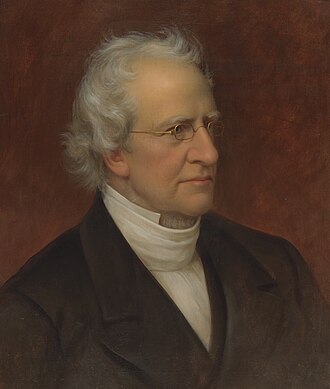
Charles Hodge · 1797 – 1878
Commentary on Romans; Systematic Theology
1835; 1871–1873 · Original editions · scanned edition
153pages in 5 volumes
92 hreading time
3,209passages linked to Scripture
8,167links to verses
Contents
Volume 1CHARLES HODGE, D.D. – THE DECREES OF GOD.pages 1–40
- CHARLES HODGE, D.D.1
- CARD.1
- ON METHOD1
- Necessity for System in Theology1
- Deistic and Rationalistic Form.1
- Dogmatic Form.1
- Transcendentalists.1
- Consequences of the Mystical Method.1
- The Teaching of the Spirit.2
- CHAPTER II.2
- CHAPTER III.3
- CHAPTER IV.4
- ROMAN CATHOLIC DOCTRINE CONCERNING THE RULE OF FAITH.6
- Incompleteness of the Scriptures.6
- Obscurity of the Scriptures.6
- The Latin Vulgate.6
- Tridentine Doctrine.6
- The Organs of the Church's Infallibility.6
- The Transmontane Theory.6
- C. Tradition and Development.7
- Modern Theory of Development.7
- The Real Question.7
- No Promise of Divine Intervention.7
- No Criterion.7
- Common Consent not a Criterion.7
- Inadequacy of the Evidences of Consent.7
- Protestant Doctrine of the Nature of the Church.8
- The Opposing Theories of the Church.8
- Proof of the Protestant Doctrine of the Church.8
- Modern Prelates are not Apostles.8
- The Arian Apostasy.8
- The Romish Evasion of this Argument.8
- THE PROTESTANT RULE OF FAITH.9
- The Canon.9
- A. The Nature of Inspiration. Definition.9
- B. Inspiration Supernatural.9
- Argument from the Meaning of the Word Prophet.9
- Inspiration of the New Testament Writers.9
- The Testimony of Paul.9
- Plenary Inspiration.10
- I. Objections.10
- Discrepancies and Errors.10
- Historical and Scientific Objections.10
- A. Naturalistic Doctrine.10
- Schleiermacher's Theory.10
- Objections to Schleiermacher's Theory.10
- B. Gracious Inspiration.11
- C. Partial Inspiration.11
- ORIGIN OF THE IDEA OF GOD.12
- The Knowledge of God is Universal.12
- Objections to the Assumption that the Knowledge of God is Universal.12
- The Belief in God Necessary.12
- CHAPTER II.13
- ANTI-THEISTIC THEORIES.14
- Atheism.14
- Is Atheism possible?14
- A. The Doctrine of Epicurus.14
- Locke (1632-1704).14
- Hartley (1705-1757).14
- Priestley (1733-1804).14
- D. Positivism.15
- Remarks.15
- Practical Applications of Positivism.15
- Leading Principles.15
- Correlation of the Physical and Vital Forces.15
- Dr. Carpenter's Theory.15
- Animal Life.16
- Mental Phenomena.16
- The German Physicists.16
- F. Refutation.16
- Materialism is Atheistic.17
- The Correlation of Physical and Vital and Mental Forces.17
- The Argument from Analogy.17
- Further Arguments of the Materialists.17
- Professor Joseph Henry.17
- Dr. Beale.17
- Mr. Wallace.17
- Vital and Physical Forces not Convertible.17
- Wallace, the Naturalist.18
- A. What Pantheism is.18
- General Principles of the System.18
- History of Pantheism.18
- B. Brahminical Pantheism.18
- Relation of Infinite Being to the World.19
- Relation of Pantheism to Polytheism.19
- Effect of Pantheism on Religion.19
- Character of the Hindu Worship.19
- The Anthropology of the Hindus.19
- The Effect of Pantheism on the Social Life of the Hindus.19
- C. Grecian Pantheism.19
- The Ionic School.19
- The Eleatic School.19
- The Stoics.19
- Plato.19
- Ideas.19
- The Relation of Ideas, in Plato's Philosophy, to God19
- The Cosmogony of Plato.20
- The Nature of the Soul.20
- Aristotle.20
- The Neo-Platonists.20
- John Scotus Erigena.20
- Spinoza.20
- F. Conclusion.20
- THE KNOWLEDGE OF GOD21
- God Inconceivable.21
- God Incomprehensible.21
- Our Knowledge of God Partial.21
- Argument from the Revelation of God in Nature.21
- Argument from Scripture.21
- Argument from the Manifestation of God in Christ.21
- Sir William Hamilton's Argument.21
- The Infinite cannot Know.22
- Different Kinds of Ignorance.22
- B. Regulative Knowledge.22
- Objections to the Doctrine of Regulative Knowledge.22
- Wrong Definition of Knowledge.22
- Hamilton's Doctrine Leads to Scepticism.23
- Necessity of a Supernatural Revelation.23
- NATURE AND ATTRIBUTES OF GOD23
- Being of God.23
- Relation of the Attributes to the Essence of God.23
- Divine Attributes.23
- The Divine Attributes differ Virtualiter.24
- A. Scriptural Doctrine.25
- B. Philosophical View.25
- Modern Philosophical Views.25
- Philosophical Statement.25
- A. Its Nature.25
- The Doctrine of the Scriptures on this Subject.25
- B. The Objects of Divine Knowledge.25
- The Actual and the Possible.26
- C. Scientia Media.26
- The Origin of this Distinction.26
- D. Foreknowledge.26
- E. The Wisdom of God.26
- C. The Decretive and Preceptive Will of God.26
- D. Antecedent and Consequent Will.26
- E. Absolute and Conditional Will.26
- B. Omnipotence.26
- C. The Negation of Power.26
- D. Absolute Power.26
- Potentia Absoluta and Potentia Ordinata.26
- E. Confounding Will and Power.26
- This Doctrine Destroys our Knowledge of God.27
- The Optimist Theory.27
- Proof of the Scriptural Doctrine.27
- Argument from the Religious Experience of Believers.27
- Argument from the Holiness of God.27
- Argument from the Connection between Sin and Misery.27
- Paul's Argument.27
- A. The Scriptural Doctrine.28
- Benevolence.28
- Love.28
- B. The Existence of Evil.28
- Objections to this Theory.28
- The Scriptural Doctrine.28
- CHAPTER VI.29
- Psalm ii. 7.30
- THE DIVINITY OF CHRIST.31
- The Protevangelium.31
- Jehovah and the Angel Jehovah.31
- A. The Book of Genesis.31
- D. The Psalms.31
- E. The Prophetical Books.31
- His Authority as a Teacher.32
- His Control over all Creatures.32
- E. His Control over Nature.32
- A. The Writings of St. John.32
- Other Passages in St. John's Gospel.32
- Our Lord's Last Discourse.32
- The Epistles of St. John.32
- The Apocalypse.32
- B. The Epistles of St. Paul.32
- The Epistles to the Corinthians.33
- Galatians.33
- Ephesians.33
- Philippians.33
- Colossians.33
- The Pastoral Epistles33
- Epistle to the Hebrews.34
- THE HOLY SPIRIT.34
- A. His Personality.34
- Proof of his Personality.34
- Relation of the Spirit to the Father and to the Son.34
- A. In Nature.34
- The Spirit the Source of all Intellectual Life.34
- THE DECREES OF GOD.35
- Free Acts are Foreordained.35
- D. It is Fatalism.36
- CHAPTER X.36
- CHAPTER XI.37
- CHAPTER XII.39
- CHAPTER XIII.40
Volume 2PART II. — ANTHROPOLOGY. – THE EXALTATION OF CHRIST.pages 41–87
- PART II. — ANTHROPOLOGY.41
- ORIGIN OF MAN.41
- Heathen Doctrine of Spontaneous Generation.41
- Modern Doctrine of Spontaneous Generation.41
- Lamarck.41
- Vestiges of Creation.41
- Darwin.41
- Remarks on the Darwinian Theory.41
- The Atheistic Character of the Theory.41
- Theories of the Universe.42
- Darwin.42
- J. J. Murphy.42
- Owen.42
- The Reign of Law Theory.42
- Admitted Difficulties in the Way of the Darwinian Theory42
- Sterility of Hybrids.42
- Geographical Distribution.42
- Pangenesis.42
- Soul of the Sparrow and the Bee!42
- Lake Dwellings.42
- Fossil Human Remains.43
- Flint Implements.43
- Argument from the Races of Men and from Ancient Monuments43
- NATURE OF MAN.44
- Relation of the Soul and Body.44
- Realistic Dualism.44
- Doubtful Passages Explained.44
- Its General Character.44
- Generic Humanity.45
- Objections to Realism.45
- Not Supported by Consciousness.45
- Realism Contrary to the Teachings of Scripture.45
- Inconsistent with the Doctrine of the Trinity.45
- THE ORIGIN OF THE SOUL.46
- Origen's Doctrine.46
- Argument from the Nature of the Soul.46
- UNITY OF THE HUMAN RACE.47
- General Characteristics of Species.47
- Definitions of Species.47
- Organic Structure.47
- Physiological Argument.47
- Psychological Argument.47
- The Evidence of Identity of Race Cumulative.47
- The Spiritual Relationship of Men.48
- ORIGINAL STATE OF MAN.48
- Ephesians iv. 24.48
- Objections to the Romish Doctrine.49
- Argument from the General Judgment of Men.49
- Argument from Scripture.49
- The Faith of the Church on this Subject.49
- This the Common Rule of Judgment.49
- The Testimony of Scripture.49
- The Faith of the Church.49
- Objections Considered.49
- Answer to the Pelagian Arguments.49
- COVENANT OF WORKS.50
- THE FALL.51
- The Scriptural Account.51
- The Tree of Life.51
- The Tree of Knowledge.51
- The Serpent.51
- The Nature of the Temptation.51
- The Effects of the First Sin.51
- CHAPTER VIII.51
- FREE AGENCY.57
- Necessity.57
- Contingency.57
- Certainty.57
- The Will.57
- Motive.57
- Cause.58
- Liberty.58
- Liberty and Ability.58
- Self-determination and Self-determination of the Will.58
- Points of Agreement.58
- Arguments from Scripture.58
- The Argument from Consciousness.59
- Argument from the Moral Character of Volition.59
- Argument from the Rational Nature of Man.59
- Argument from the Doctrine of a Sufficient Cause.59
- PART III. — SOTERIOLOGY.60
- THE PLAN OF SALVATION.60
- The Importance of a Knowledge of this Plan.60
- Objections to Supralapsarianism.60
- Arguments against this Scheme.60
- Preliminary Remarks.61
- Statement of the Doctrine.61
- Proof of the Doctrine.61
- Argument from the Facts of Providence.61
- Sovereignty of God in the Dispensations of his Providence.61
- Argument from the Facts of Scripture.61
- From the Work of the Spirit.61
- Election is to Holiness.61
- From the Gratuitous Nature of Salvation.61
- The Apostle's Argument in Romans ix.62
- Argument from Experience.62
- Express Declarations of Scripture.62
- The Words of Jesus.62
- Founded on our Ignorance.62
- THE COVENANT OF GRACE.63
- Two Covenants to be Distinguished.63
- Christ as Mediator of the Covenant.63
- The Condition of the Covenant.63
- The Promises of the Covenant.63
- Faith the Condition of Salvation from the Beginning.64
- First, from Adam to Abraham.64
- The Second Dispensation.64
- The Third Dispensation.64
- The Gospel Dispensation.64
- PERSON OF CHRIST.65
- Proof of the Doctrine.65
- First Argument, all the Elements of the Doctrine separately taught.65
- Christ One Person.65
- Second Argument, from the Current Representations of Scripture.65
- Third Argument, from Particular Passages of Scriptures.65
- Two Natures in Christ.65
- There is no Transfer of the Attributes of one Nature to the Other.66
- The Union is a Personal Union.66
- Communion of Attributes.66
- The Acts of Christ.66
- The Incarnate Logos the Source of Life.66
- The Exaltation of the Human Nature of Christ.66
- The Ebionites.66
- The Gnostics.66
- The Apollinarian Doctrine.66
- Nestorianism.66
- Eutychianism.67
- Remarks on the Lutheran Doctrine.67
- Socinianism.68
- Swedenborg.68
- Isaac Watts.68
- Objections.68
- Pantheistical Christology.68
- Theistical Christology.68
- Ebrard.69
- Gess.69
- Remarks.69
- Schleiermacher.69
- Schleiermacher's Christology.69
- Objections to this Theory.69
- Founded on Pantheistic Principles.69
- Involves the Rejection of the Doctrine of the Trinity.69
- Schleiermacher's Anthropology.70
- THE MEDIATORIAL WORK OF CHRIST.71
- PROPHETIC OFFICE.72
- PRIESTLY OFFICE.72
- The Word Atonement.72
- Satisfaction.72
- Penalty.72
- Vicarious.73
- Guilt.73
- Redemption.73
- Expiation and Propitiation.73
- SATISFACTION OF CHRIST.73
- Romish Doctrine of Satisfaction.73
- Proof of the Immutability of the Law.74
- The Old Testament Sacrifices Expiatory.74
- The Fifty-third Chapter of Isaiah.75
- Christ our Redeemer.75
- Redemption from the Penalty of the Law.75
- Redemption from the Law.75
- Redemption from the Power of Sin.75
- Redemption from the Power of Satan.76
- Final Redemption from all Evil.76
- Argument from Related Doctrines.76
- Argument from the Religious Experience of Believers.76
- Von meines Zornes Ruthen!76
- Moral Objections.76
- Popular Objections.77
- There is no Vindicatory Justice in God.77
- The Transfer of Guilt or Righteousness Impossible.77
- Expiation a Heathenish Idea.77
- FOR WHOM DID CHRIST DIE?77
- Argument from the Doctrine of Election.77
- Express Declarations of Scripture.77
- Argument from the Special Love of God.77
- Argument from the Believer's Union with Christ.77
- THEORIES OF THE ATONEMENT.78
- Objections to this Theory.78
- Remonstrants.79
- The Supernaturalists.79
- American Theologians.79
- Objections to the Theory.79
- Mystical Theory at the Time of the Reformation.79
- Osiander.79
- Schwenkfeld.79
- Oetinger.80
- The Modern Views.80
- INTERCESSION OF CHRIST.80
- KINGLY OFFICE OF CHRIST.81
- Christ's Dominion over the Universe.81
- Christ's Spiritual Kingdom.81
- Christ's Visible Kingdom.81
- Nature of this Kingdom.81
- HUMILIATION OF CHRIST.82
- The Romish Doctrine of the "Descensus ad Inferos."82
- THE EXALTATION OF CHRIST.83
- Nature of Christ's Resurrection Body.83
- CHAPTER XIV.84
Volume 3SYSTEMATIC THEOLOGY – THE CONCOMITANTS OF THE SECOND ADVENT.pages 88–126
- SYSTEMATIC THEOLOGY88
- CHAPTER XV.88
- Exposition of the Doctrine.89
- Regeneration an Act of God.89
- Regeneration an Act of God's Power.89
- Regeneration in the Subjective Sense of the Word not an Act.89
- Not a Change of Substance.89
- It is a New Life.89
- It is a New Birth.89
- A New Heart.89
- Denial of Supernaturalism.89
- Resting on False Psychological Theories.89
- CHAPTER XVI.89
- CHAPTER XVII.92
- CHAPTER XVIII.95
- CHAPTER XIX.97
- THE MEANS OF GRACE103
- Testimony of History.103
- The Office of the Word as a Means of Grace.103
- The Lutheran Doctrine.104
- Remarks.104
- Usage of the Word Sacrament.104
- The Theological Usage and Definition of the Word.104
- Lutheran Doctrine.104
- Romish Doctrine.104
- Remonstrant Doctrine.104
- Confirmation.105
- Penance.105
- Orders.105
- Matrimony.105
- Extreme Unction.105
- Zwinglian and Remonstrant Doctrine.105
- Doctrine of the Reformed Church.105
- The Lutheran Doctrine.105
- Doctrine of the Church of Rome on the Efficacy of the Sacraments.106
- Ex Opere Operato.106
- The Administrator.106
- The Mode of Baptism.107
- Use of the Word in the Classics.107
- Use of the Words in the Septuagint and Apocrypha.107
- The New Testament Usage.107
- The Patristic Usage.107
- The Catholicity of the Gospel.107
- Argument from the Design of the Ordinance.107
- Qualifications for Adult Baptism.108
- Romish Theory of the Church.108
- Puritan Theory of the Church.108
- The Common Protestant Theory.108
- First Proposition. The Visible Church is a Divine Institution.108
- Second Proposition. The Visible Church does not consist exclusively of the Regenerate.108
- Third Proposition. The Commonwealth of Israel was the Church.108
- Difference between the Jewish and Christian Usage.109
- Doctrine of the Church of Rome on the Baptism of Children.109
- The Puritan Doctrine on this Subject.109
- Doctrine and Usage of the Reformed Churches.110
- Doctrine of the Reformed Churches.110
- Proof of the Reformed Doctrine.110
- Baptism is a Condition of Salvation.110
- Baptism as a Duty.111
- Baptism as a Means of Grace.111
- Baptismal Regeneration.111
- Direct Arguments against the Doctrine of Baptismal Regeneration.112
- Its Necessity.112
- Its Effects.112
- The Sacramental Actions.113
- Breaking the Bread.113
- The Distribution and Reception of the Elements.113
- The Design of the Lord's Supper.113
- Qualifications for the Lord's Supper.113
- Zwinglian Statements.113
- Calvin's Doctrine.113
- Manducation.114
- The Efficacy of the Lord's Supper as a Sacrament.114
- Applications of these Principles to the Lord's Supper.114
- Remarks.115
- Statement of the Doctrine in the Symbolical Books.115
- Manducation.115
- Mode of Presence.115
- Transubstantiation.116
- Proof of the Doctrine.116
- Withholding the Cup from the Laity.116
- The Lord's Supper as a Sacrifice.116
- Remarks.116
- The Object of Prayer.117
- Requisites of Acceptable Prayer.117
- Different Kinds of Prayer.117
- Public Prayer.117
- Prayer as a Means of Grace.117
- The Power of Prayer.117
- STATE OF THE SOUL AFTER DEATH.118
- The Intermediate State.118
- The Limbus Patrum.119
- The Limbus Infantum.119
- Hell.119
- Heaven.119
- Purgatory.119
- Arguments against the Doctrine.120
- History of the Doctrine.120
- THE RESURRECTION.121
- The Identity of the Future with our Present Body.121
- Nature of the Resurrection Body.121
- SECOND ADVENT.122
- The Antichrist of Daniel.123
- The Antichrist of the Apocalypse.123
- Roman Catholic Doctrine of Antichrist.123
- THE CONCOMITANTS OF THE SECOND ADVENT.124
- The Time of this General Resurrection.124
- The Church Doctrine.124
- Remarks.125
- The Consummation.125
- The Duration of Future Punishment.126
- Objections.126
- The Goodness of God.126
Volume 4EPISTLE TO THE EPHESIANS. – COMMENTARY.pages 127–136
- EPISTLE TO THE EPHESIANS.127
- CHAPTER I.127
- THE SALUTATION.127
- COMMENTARY.127
- SECTION II.—Vs. 3-14.127
- SECTION III.—Vs. 15-23.128
- CHAPTER II.129
- SECTION I.—Vs. 1-10.129
- SECTION II.—Vs. 11-22. 11.130
- CHAPTER III.131
- SECTION I.—Vs. 1-13.131
- SECTION II.—Vs. 14-21.132
- CHAPTER IV.132
- SECTION I.—Vs. 1-16.132
- SECTION II.—Vs. 17-32.—C. V. 1-2.133
- SECTION I.—Vs. 3-20.134
- SECTION II.—Vs. 17-33.135
- CHAPTER VI.136
- SECTION I.—Vs. 1-9.136
- SECTION II.—Vs. 10-24.136